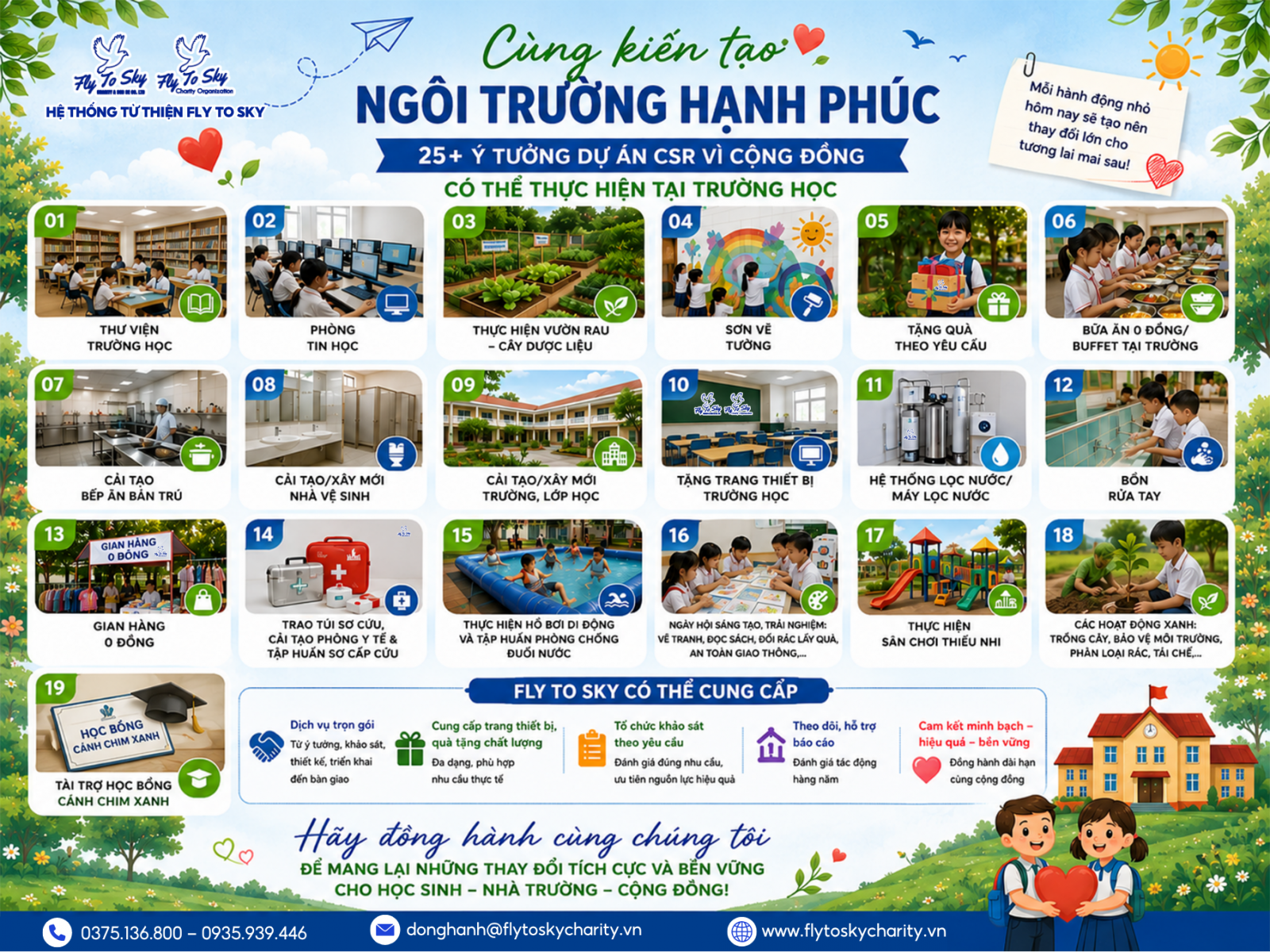
As businesses increasingly recognize the importance of corporate social responsibility, CSR projects in schools are becoming a practical and effective approach with the potential to create long-term impact. From small-scale initiatives such as installing handwashing stations, setting up libraries and painting educational murals to larger projects such as renovating school kitchens, building new restrooms, installing water filtration systems and developing children's playgrounds, all of these efforts can bring meaningful changes to students, teachers and schools.
Fly To Sky hopes to work alongside businesses, organizations and philanthropists to help create happier, safer and more inspiring learning environments for students.
Why Invest in CSR Projects in Schools?
Investing in schools is one of the most meaningful forms of CSR, with the potential to create sustainable impact. First, schools directly benefit a large number of people. A single project implemented at one school can reach hundreds or even thousands of students over the course of several academic years.
Second, schools are places where long-term impact can be created. A library, computer room, school kitchen or clean water system does more than serve immediate needs; it continues to provide value for many years to come. This allows CSR resources to be used effectively, with outcomes that can be clearly measured.
Third, investing in schools means investing in human development. When students have access to better, safer and more fully equipped learning environments, they have greater opportunities to develop intellectually, physically, socially and emotionally. This is the foundation of sustainable development.
Finally, CSR initiatives in schools enable businesses to create tangible social value that is easy to communicate and share with the wider community. Positive stories and images from schools often resonate strongly with the public because they reflect issues that matter to everyone: children, education and the future.
CSR Project Ideas That Can Be Implemented in Schools
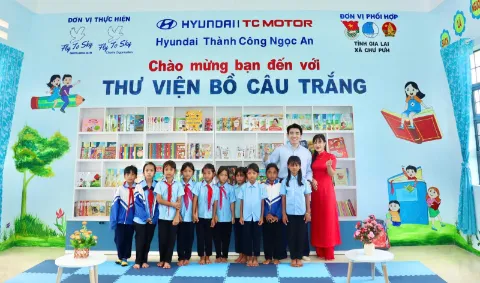
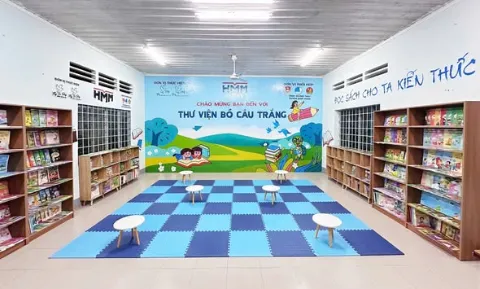
Education – School Libraries (White Dove Bookshelf Project)
Implementation: Establishing or upgrading school libraries, bookshelves and reading spaces, while also organizing reading promotion activities and managing and developing learning materials.
Purpose/Impact: Creating a welcoming reading environment, fostering a love of books, helping students access knowledge more effectively and building a sustainable reading culture within schools.
SDGs: SDG 4, 10
Digital Education – Computer Rooms (Shared Screens Project)
Implementation: Mobilizing resources (funding and new or used technology equipment) to establish computer rooms in schools in disadvantaged areas. The project also provides warranty support, implements digital learning platforms and open educational resources, and offers training in information security skills.
Purpose/Impact: Improving access to technology, enhancing the quality of teaching and learning, and promoting the development of a digital society.
SDGs: SDG 4, 9, 10
Environment and Education – Vegetable and Medicinal Plant Gardens
Implementation: Planning a small garden within the school, improving the soil, preparing planting beds, installing an irrigation system, and providing seeds and seedlings of vegetables or medicinal plants suited to local conditions. The project can also incorporate hands-on activities for students, such as sowing seeds, caring for plants, harvesting, learning about their uses and exploring how they can be incorporated into meals or environmental lessons.
Purpose/Impact: Creating an engaging hands-on learning space, teaching life skills and environmental awareness, and providing a source of clean and safe food.
SDGs: SDG 2, 4, 12, 15
School Environment – Wall Painting
Implementation: Painting murals, educational messages and green-themed artwork on school walls.
Purpose/Impact: Beautifying school spaces, inspiring learning, making the educational environment more welcoming and spreading positive messages.
SDGs: SDG 4, 11, 13
Social Support – Needs-Based Gift Giving
Implementation: Providing gifts that meet the actual needs of students and schools.
Gifts may include school supplies, books, warm clothing, backpacks, essential goods, sports equipment, personal items or specialized gifts tailored to specific circumstances.
Purpose/Impact: Providing direct support that addresses actual needs.
SDGs: SDG 1, 4, 10
Nutrition – Free Meal Programme
Implementation: Organizing meals for students and teachers, which may include lunch, afternoon snacks or themed community-sharing buffets.
Purpose/Impact: Improving nutrition and fostering connections.
SDGs: SDG 2, 3, 10
Nutrition – School Kitchen Renovation
Implementation: Upgrading school meal preparation facilities, including cooking areas, food preparation zones, storage rooms, ventilation and exhaust systems, worktables, cooking utensils and essential hygiene standards. The project may also involve reorganizing operational procedures, arranging efficient movement within the kitchen and providing school staff with training on equipment use.
Purpose/Impact: Improving the quality of school meals, enhancing food safety and hygiene, and promoting students' daily health.
SDGs: SDG 2, 3, 6, 12
Facilities – School Restrooms
Implementation: Constructing new or renovating existing school restrooms to ensure they are clean and safe, with proper drainage and ventilation systems, washbasins and standard sanitary facilities. The project may include repairing floors, walls, roofs, doors and plumbing, as well as upgrading restroom areas to accommodate the number of students.
Purpose/Impact: Improving hygiene and reducing the risk of disease.
SDGs: SDG 3, 6, 11
Infrastructure – School Buildings and Classrooms
Implementation: Repairing or constructing facilities such as roofs, floors, walls, doors, windows, ceilings, desks and chairs, lighting systems and ventilation systems in classrooms or other school areas.
Purpose/Impact: Creating safe and well-maintained learning spaces, providing teachers and students with better teaching and learning environments.
SDGs: SDG 4, 9, 11
Equipment – School Equipment and Supplies
Implementation: Providing student desks and chairs, writing boards, fans, projectors, document cabinets, teaching equipment, practical learning materials and other essential items for classrooms and schools. Implementation is based on actual shortages to ensure that resources are used effectively.
Purpose/Impact: Improving teaching quality, making learning more accessible for students and helping schools operate more effectively.
SDGs: SDG 4, 9
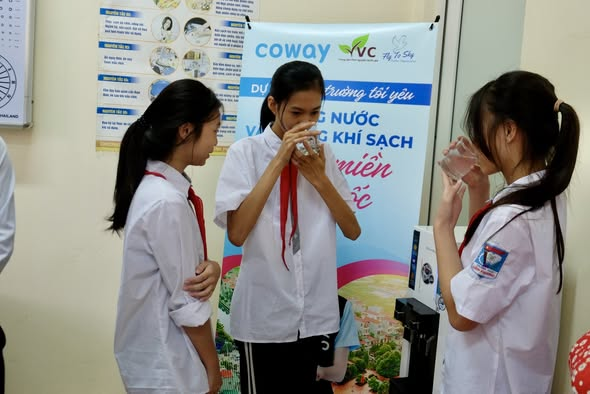
Clean Water – Water Filtration Systems (Water Filtration Warriors Project)
Implementation: Installing water filtration systems or water purifiers and related equipment to provide students and teachers with a clean and safe water supply.
Purpose/Impact: Protecting health in schools, reducing the risk of disease and ensuring long-term, sustainable access to clean water.
SDGs: SDG 3, 6
Hygiene – Handwashing Stations
Implementation: Installing washbasins, water taps, soap dispensers, drainage facilities and hygiene instruction signs to make handwashing convenient for students in their daily routines. The project may also incorporate communication activities on proper handwashing, healthcare and disease prevention in schools.
Purpose/Impact: Helping students develop good hygiene habits, prevent disease and improve their awareness of personal healthcare.
SDGs: SDG 3, 6
Social Support – Free Goods Stalls
Implementation: Organizing stalls that provide essential items free of charge, such as clothing, books, school supplies, necessities and household items for students and families facing difficult circumstances. The project can be designed as an interactive experience, allowing recipients to choose items that best suit their needs.
Purpose/Impact: Promoting a spirit of sharing and mutual support.
SDGs: SDG 1, 10, 12
Healthcare – School Medical Rooms and First Aid (Fly+ Healthbox Project)
Implementation: Providing medicine cabinets, first-aid kits, beds or designated areas for initial medical care, basic medical supplies and instructional materials on handling emergencies. The project may also include first-aid training for teachers, students and designated staff to strengthen their ability to respond to emergencies on site.
Purpose/Impact: Improving the ability to provide initial medical assistance, enhancing school safety and better protecting students' health.
SDGs: SDG 3, 4
Safety – Mobile Swimming Pools (Waterwise Project)
Implementation: Setting up modular or mobile swimming pools at schools, combined with swimming lessons, practical water safety training and drowning prevention activities. The project is suitable for areas with a high risk of drowning or limited access to permanent swimming pools.
Purpose/Impact: Equipping children with essential survival skills, reducing the risk of drowning and strengthening child safety education.
SDGs: SDG 3, 4, 11
Experiential Learning – Creative Festivals
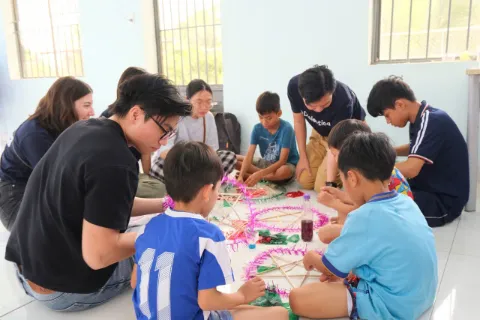
Implementation: Organizing activities such as painting, reading, recycling exchanges for gifts, road safety education, educational games and life skills experience zones. The programme can be designed as an integrated festival that combines learning and play, creating a fun and engaging atmosphere.
Purpose/Impact: Encouraging creativity, developing life skills, providing positive experiences and helping students learn through hands-on activities.
SDGs: SDG 4, 11, 12, 13
Recreation – Children's Playgrounds (Green Playground Project)
Implementation: Building or renovating playgrounds, physical activity areas and facilities suitable for students' age groups.
Purpose/Impact: Creating healthy spaces for physical activity, supporting physical development, encouraging social interaction and bringing joy to children.
SDGs: SDG 3, 4, 11
Education – Blue Wings Scholarship
Implementation: Providing long-term scholarships to students facing difficult circumstances who demonstrate determination and a strong commitment to their studies. Scholarships may be accompanied by learning support, mentoring connections, regular progress reviews and encouragement to help students stay motivated and continue their education.
Purpose/Impact: Reducing students' financial burdens, helping them maintain stable access to education and nurturing opportunities for long-term development.
SDGs: SDG 4, 10
1. Projects for Education and Student Capacity Development
This group includes initiatives such as school libraries, computer rooms, school equipment donations, creative playgrounds and experiential learning festivals. These projects help students access knowledge more effectively, learn in more modern environments and develop a broader range of skills.
What these projects have in common is their long-term impact on the quality of education. A well-stocked library helps foster a reading culture. A well-equipped computer room helps students keep pace with the digital age. A creative festival can inspire children's thinking, curiosity and ability to work together.
2. Projects for Nutrition, Clean Water and Health
This group includes free meal programmes, school kitchen renovations, water filtration systems, handwashing stations, medical rooms, first-aid kits and first-aid training. These projects have a direct impact on students' health.
These facilities and initiatives help make schools safer, cleaner and more caring environments. Students have access to better meals, clean water, handwashing areas that help them develop good hygiene habits, and medical rooms where health issues can be addressed promptly. These are basic needs, but they carry great significance.
3. Projects for School Facilities and Learning Environments
Initiatives such as renovating school restrooms, constructing new classrooms and school buildings, painting murals, developing vegetable gardens and improving children's playgrounds all fall into this category. These projects help create more positive, clean and safe learning environments.
A pleasant school environment is about more than aesthetics. It also influences students' learning motivation, their attitudes towards attending school and their sense of pride in the place where they study. A well-maintained classroom, an attractive playground or a colourful mural can provide great inspiration for both teachers and students.
4. Projects for Social Welfare and Community Engagement
This group includes needs-based gift giving, free goods stalls, essential goods donations and support for disadvantaged students. Its key strengths lie in its flexibility and strong humanitarian value.
When implemented based on actual needs, these gifts can directly address the difficulties faced by recipients. These projects can also generate strong emotional connections, helping businesses engage more closely with communities and demonstrate a genuine spirit of sharing.
How to Choose the Right CSR Project for Each School
Not every school needs the same type of support. Therefore, conducting a needs assessment is the most important step when developing a CSR programme. A school in a mountainous area may need restrooms, clean water, a library and a kitchen. An urban school may need a playground, a computer room, a library and experiential learning activities. A kindergarten may need handwashing stations, playgrounds, learning equipment and nutritional support.
Businesses should select projects based on three criteria: actual needs, available budget and potential impact. With a moderate budget, they can prioritize initiatives such as mural painting, libraries, handwashing stations, free goods stalls, gift giving or experiential learning festivals. With a larger budget, they can invest in school kitchens, restrooms, computer rooms, clean water systems or children's playgrounds. If the goal is to create significant and long-lasting impact, priority should be given to projects involving essential school infrastructure.
The Role of Implementation Partners in School CSR Programmes
An effective CSR programme requires not only funding but also an experienced implementation partner. For a project to become part of everyday school life, many steps are needed, including needs assessments, solution design, budget planning, construction and implementation, activity coordination, communications, handover and impact evaluation.
Fly To Sky can provide comprehensive services, including needs assessments based on specific requirements, the provision of equipment and gifts, activity organization, project implementation, ongoing support and annual impact assessment reporting. This approach helps businesses save time, optimize resources and ensure that their projects deliver measurable results.
CSR is not simply about giving. True CSR is about ensuring that resources are allocated to the right places, address the right needs and create sustainable change. This is also the guiding principle that school-based programmes should strive to follow.
Every school is a small community, but its impact can reach far beyond its walls. When a business invests in a school, it is not merely supporting a facility or a programme; it is also helping shape the future of many children. When a library opens, a computer room is equipped, a school kitchen is renovated, a restroom is newly built or a playground is completed, the value created goes beyond convenience. It also brings hope, opportunities and confidence.
CSR projects in schools can begin with something small, but when implemented effectively and consistently, they can bring about significant change. Along this journey, the support of businesses, organizations and communities is the most important resource in turning meaningful ideas into reality.