Where philanthropy has fallen short: Why good projects are not enough
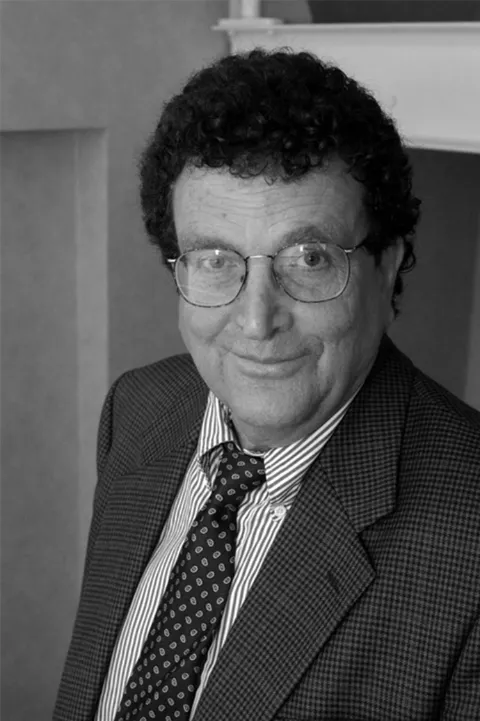
At Alliance magazine’s 30th-anniversary conference on 10 September 2026, the audience was asked a difficult question: had philanthropy failed over the previous three decades? Barry Knight reports that the answer in the room was a clear yes. But his argument is not that charitable giving or the services it funds are worthless. He sees a problem of strategy: how philanthropic resources are used, and whether they help shift the conditions that keep social problems in place.
In his article “If philanthropy has failed, what now?”, published by Alliance on 26 October 2026, Knight argues that delivering successful individual programmes is not the same as bringing about lasting change. He calls for greater attention to people, relationships and the capacity of communities to organise themselves.
A record of projects, but too little investment in the bigger story
Knight argues that much of progressive philanthropy has spent decades supporting programmes and services, tracking their outputs and demonstrating impact. Those activities matter. Yet while funders have responded to immediate needs, they have often done much less to shape the ideas, institutions and power structures that influence society as a whole.
To explain the contrast, Knight draws on Sally Covington’s account of conservative funding. From the late 1940s, a relatively small number of donors consistently backed economists, policy institutes, law schools and intellectual networks. Their investment helped ideas once seen as marginal gain a much wider audience. When the post-war economic settlement weakened in the 1970s, those networks already had the people and arguments to influence public debate.
The lesson is not that funders should stop paying for practical services. It is that a collection of useful interventions cannot replace a long-term view of the society a movement is trying to build. Knight believes progressive philanthropy has too often tried to repair the harm caused by the prevailing order without developing an equally compelling alternative.
The crisis is also about imagining a different future
Falling aid budgets have left many international NGOs reducing their ambitions or struggling to survive. Knight acknowledges the seriousness of the funding squeeze. But he also points out that philanthropic budgets are small compared with the vast flows of capital behind activities that harm people and the environment. Repeating short project cycles, he suggests, is unlikely to shift that balance.
What is missing is not simply more money; it is a shared account of the future worth working towards. Knight turns to Sue Goss’s idea of the “machine mind”: a belief that society can be engineered through expert solutions, predetermined plans and decisions made by those who control the funding. Such methods can organise programmes, but they cannot, on their own, explain how social power changes.
A programme may meet every target in its logframe and still leave the underlying problem largely untouched. Knight’s challenge is to look beyond the list of activities completed and ask who can change the conditions that produced the problem in the first place.
People need to organise if power is to move
Knight sees a recurring lesson in the history of abolition, women’s suffrage, civil rights, disability rights, environmental justice and living-wage campaigns. Major advances have rarely come from money alone. They have come when people built relationships, developed a common voice and organised to challenge interests that appeared firmly established.
He cites Sara Bryson, a Citizens UK organiser in northern England, who draws a sharp distinction between the ability of environmentally damaging interests to raise money and the need for campaigners to bring people together. Money can make organising possible, but it cannot substitute for trust, solidarity or collective action.
That leads Knight towards investment in community organising, local resources and the relationships on which movements depend. Communities are not simply recipients of help. They can be the people who define the issues, build alliances and decide what happens next.
From the machine to the garden
Knight’s book develops another way of understanding change: the “garden mind”. A garden cannot be made to grow by following a blueprint alone. Growth depends on the conditions around it, the relationships among living things and the care that allows those relationships to develop.
The metaphor changes what funders are there to do. Instead of designing every intervention and directing every decision, they can recognise promising work already happening, remove obstacles, make connections and offer steady support. Knight relates this approach to what Jon Edwards has called “accompaniment”: standing alongside people rather than taking charge of their efforts.
He also points to a question often raised by the Global Fund for Community Foundations: what is possible now? From Kathmandu and Nairobi to Melbourne, communities are already organising and finding ways to use their own resources. Knight’s point is that funders should notice that energy and help it develop, rather than assuming all progress must begin with a grant proposal.
Linking grassroots strength with institutions that can act
Organised communities still need opportunities to turn demands into concrete decisions. Here Knight introduces Neal Lawson’s concept of “45° change”. It describes what can happen when pressure from people organising at the grassroots meets allies within government or other formal institutions who are prepared to open doors and share power.
The Living Wage campaign offers his main example. Beginning with Citizens UK’s community organising in east London during the 1990s, the campaign gained momentum when Abdul Durrant, a night cleaner, challenged a bank at its annual general meeting about whether cleaners deserved pay they could live on. The bank later became one of the earliest accredited Living Wage Employers.
Knight reports that the campaign has helped low-paid workers secure almost £5 billion in additional wages. Living-wage movements have also taken hold in countries including Bangladesh, the Philippines, Canada and New Zealand. His point is about the path to those gains: organised people made the issue impossible to ignore, and change accelerated when people within influential institutions responded.
Six changes Knight asks funders to make
Knight’s proposals are less a new programme checklist than a different approach to the role of philanthropy.
- Fund collective power, not only projects. Support community organising, local resource mobilisation, trust and solidarity, so that people have the ability to keep acting beyond the life of a grant.
- Invest where resources can unlock wider change. Philanthropy cannot outspend every powerful economic interest. A timely, well-placed grant can nevertheless help a movement connect people and unlock capacities beyond the grant itself.
- Make room for dialogue and connection. Relationships do not become shared purpose overnight. People and organisations need time and opportunities to meet, listen and build trust.
- Stand alongside rather than take control. Funders can contribute money, skills and connections without assuming the right to decide a community’s priorities or future.
- Be willing to fund for the long term. Organising and institutional change rarely fit neatly into a single funding cycle. Patient support allows causes to develop over years.
- Recognise the power that comes with funding. Grantmakers influence agendas and definitions of success. Knight asks them to be prepared to share that power, and sometimes relinquish it.
A different purpose for philanthropic resources
Knight is not arguing against direct assistance, sound management or accountability. He wants philanthropy to use those practices in service of something larger: enabling people, relationships and collective capabilities to outlast the projects that helped sustain them.
The article also introduces ideas developed in his book A New World Is Rising: Power, Consciousness, and the Renewal of the Human Story (Palgrave Macmillan, 2026). The question he leaves funders with is not simply how to deliver another programme more efficiently, but how to help communities strengthen the work and agency already taking shape around them.
Method & scope
Prepared by Bền vững 360° as a summary of Barry Knight’s original essay. This is not a full translation; arguments and figures are attributed to the original author.
References
- Barry Knight I https://www.alliancemagazine.org/blog/if-philanthropy-has-failed-what-now/? I 2026-10-29