Contents
**Overview and origin**
| Item | Details |
|---|---|
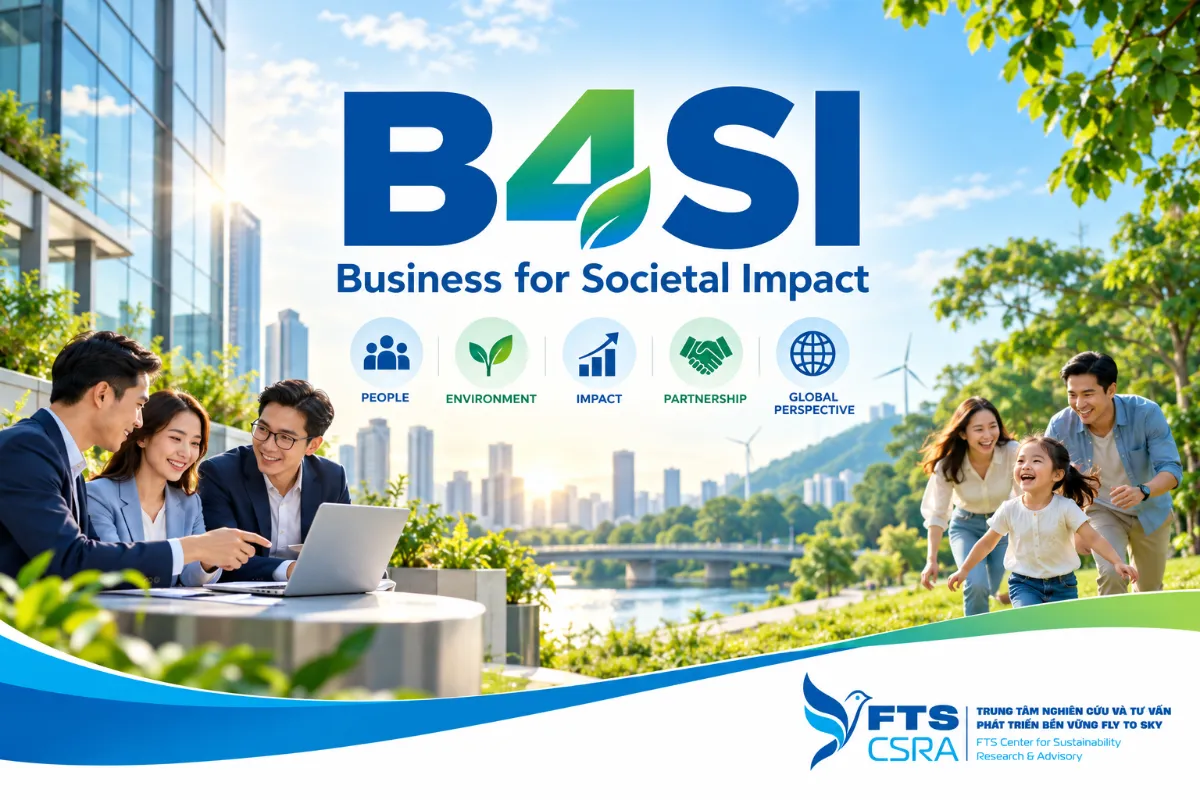
| Vietnamese name | Khung đo lường đầu tư cộng đồng B4SI (Doanh nghiệp vì tác động xã hội) |
| English name | B4SI – Business for Societal Impact (formerly LBG – London Benchmarking Group) |
| Issuer / administrator | The B4SI network, supported by SLR Consulting (its parent company, which took over Corporate Citizenship), with a global community of member companies. |
| Nature | A measurement framework and benchmark for community investment, with data verification for members. |
| Reference scope | Voluntary corporate contributions to communities (cash, time, in-kind), extended to procurement for social impact and business innovation for social impact. |
The framework began in 1994 as the London Benchmarking Group (LBG), created by large UK companies to measure community investment consistently. In 2020 LBG was renamed B4SI and broadened into three routes to impact: community investment, procurement for social impact and business innovation for social impact.
Purpose and main structure
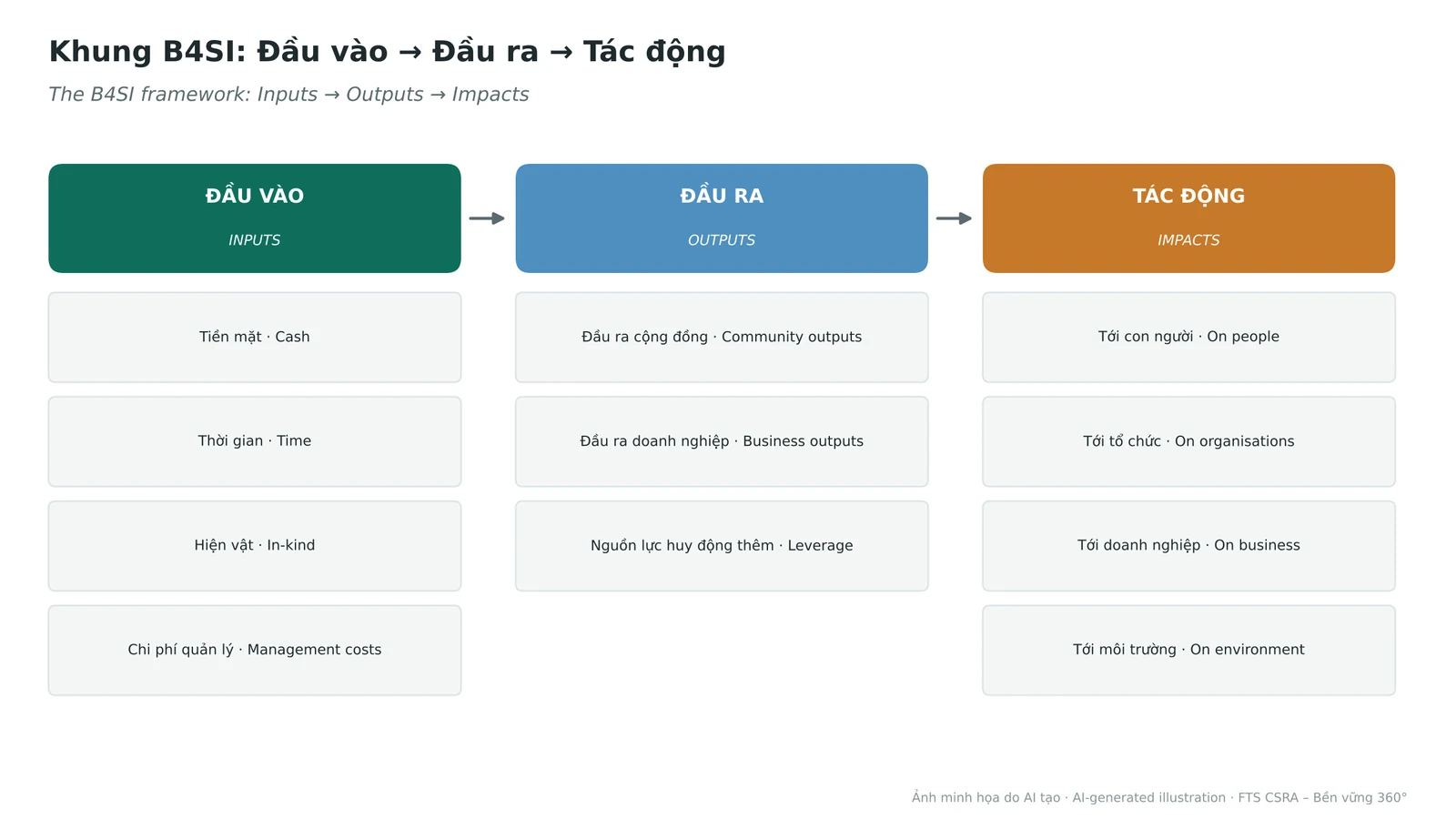
Purpose: help companies measure contributions fully, benchmark against peers and demonstrate impact instead of only reporting money spent. It follows the logic Inputs → Outputs → Impacts:
2.1. Measurement items
| Item | What is measured |
|---|---|
| INPUTS – what was contributed | |
| Cash | Grants, donations, sponsorships, contributions to foundations |
| Time | Employee volunteering in paid time (valued at salary cost) |
| In-kind | Products, equipment, pro bono services, premises (at cost) |
| Management costs | Costs of running the community programme (staff, communications) |
| OUTPUTS – what happened | |
| Community outputs | People reached, community organizations supported |
| Business outputs | Employees involved, customers and suppliers reached, media coverage |
| Leverage | Additional contributions from employees, customers and partners |
| IMPACTS – what changed | |
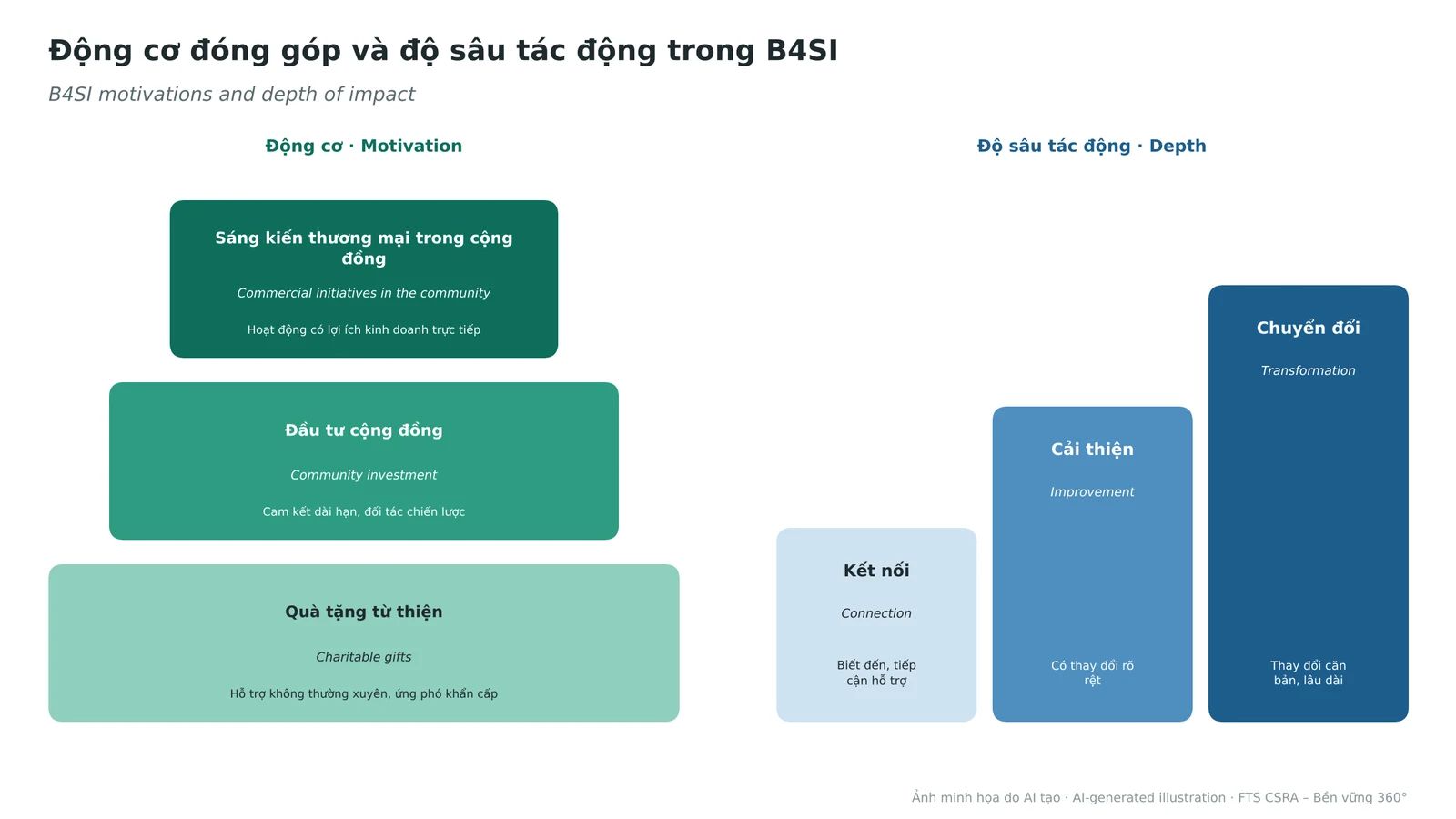
| On people | Depth: connection – improvement – transformation; Type: behaviour/attitude, skills, quality of life |
| On organisations | New/improved services, reach more people, better management, staff capacity |
| On business | Employee skills, engagement and pride; stakeholder relations; reputation |
| On environment | Environmental behaviour change and outcomes from the programme |
2.2. Three motivation categories
| Motivation | Definition |
|---|---|
| Charitable gifts | Occasional support in response to charities' appeals or emergencies |
| Community investment | Long-term strategic commitment with community partners on issues linked to the business |
| Commercial initiatives in the community | Community activities with direct business benefit (cause-related marketing, brand sponsorship) |
2.3. Cause areas used for classification
Education · Health · Economic development · Environment · Arts and culture · Social welfare · Emergency relief · Other support.
Who uses it and how
Users: companies with community programmes, corporate foundations, CSR/ESG teams and listed companies needing data for sustainability reports.
- List all community activities; classify them by motivation and cause area.
- Value inputs: cash; time at salary cost; in-kind at cost; management costs.
- Record community outputs, business outputs and leverage.
- Survey impact: depth (connection, improvement, transformation) and type of change.
- Report under B4SI; request independent verification and benchmark against peers.
Practical example
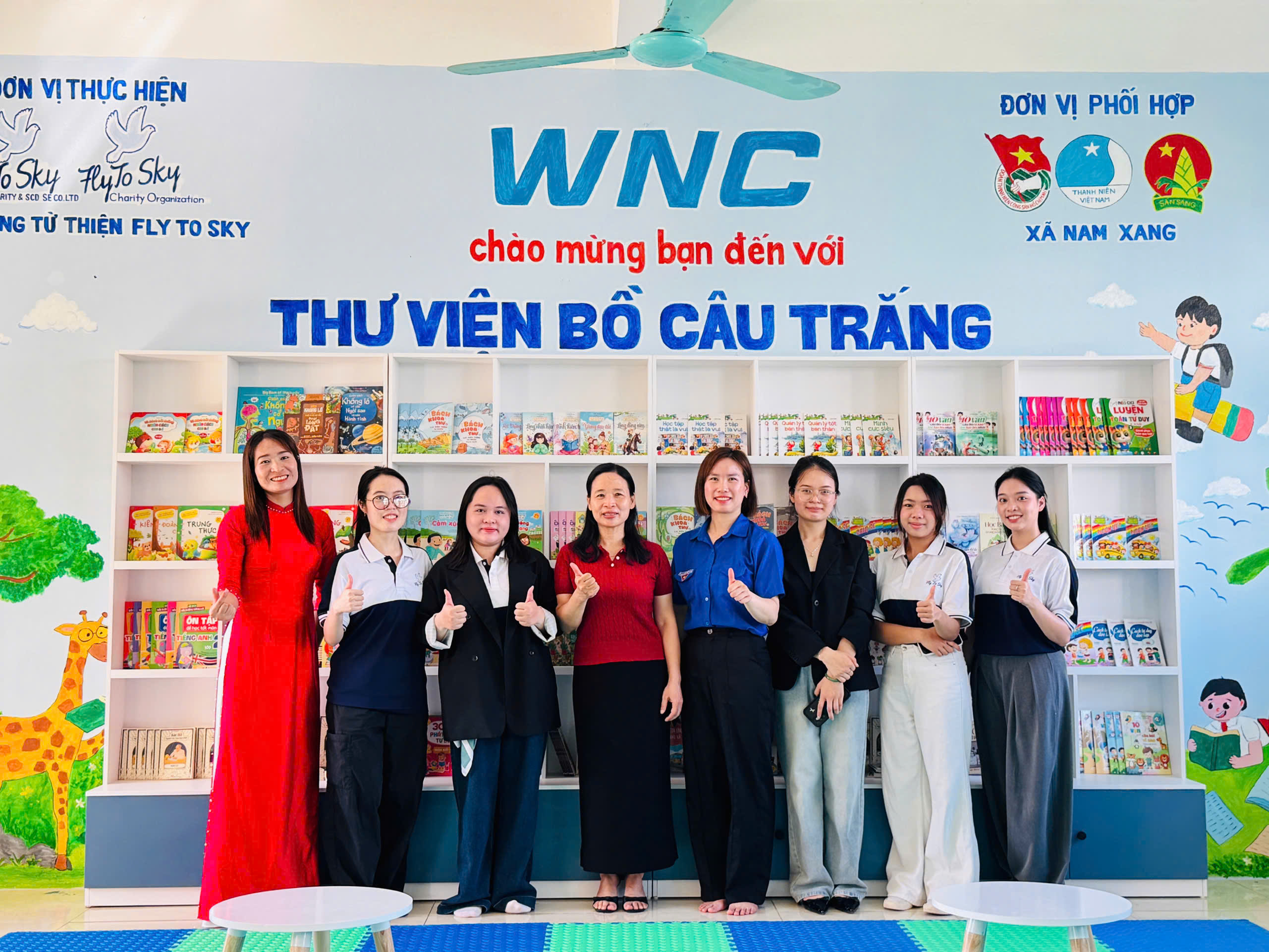
Hypothetical case: Commercial Bank Q runs a “Libraries for highland schools” programme in 2026.
| Item | Content | Value |
|---|---|---|
| Input – Cash | Funding for 20 libraries | VND 4.0 billion |
| Input – Time | 1,200 employee volunteering hours | VND 0.3 billion (salary cost) |
| Input – Management costs | Coordination staff, communications | VND 0.4 billion |
| Community outputs | 20 schools, 6,500 pupils with access to books | 6,500 people |
| Leverage | Customers donating books via the banking app | VND 0.6 billion |
| Impact on people | Survey: 55% of pupils read more often (improvement); 8% clearly improved results (transformation) | Depth |
| Impact on business | 82% of participating staff feel prouder of the bank | Engagement |
The programme is classed as community investment because it is a 3-year commitment with the provincial education department and local partners.
Notes for use in Vietnam
- Separate charity from marketing: brand-linked sponsorship is a “commercial initiative” and should not be added to charitable totals.
- Volunteering hours: count only hours in paid working time; hours outside work count as leverage.
- Tax rules: donations deductible for corporate income tax must meet the conditions and documentation of current tax rules – consult the finance team.
- Measure real impact: combine with a Theory of Change and beneficiary surveys; large programmes can use SROI.
- Reporting: B4SI data feeds GRI 201-1 (economic value distributed), GRI 203, GRI 413 and the CSI Index.
Method & scope
Content compiled and interpreted from FTS Impact Lab and documents of the issuing body; versions and sources should be verified before publication.
References
- B4SI – Framework ↗ (accessed 2026-10-24)
- B4SI Annual Review 2023 ↗ (accessed 2026-10-24)
- Example of a corporate B4SI verification statement (Burberry 2023/24) ↗ (accessed 2026-10-24)
- Cross-references: GRI 201, 203, 413; SROI; Theory of Change; CSI Index (indicators I8, S6, S7) (accessed 2026-10-24)