An air conditioner running in an empty meeting room, stacks of printed documents that are rarely used, or dozens of disposable plastic cups left behind after a meeting—these are familiar scenes in many workplaces.
Individually, such actions may seem insignificant. Yet when repeated every day across dozens or hundreds of employees, their cumulative impact on resource consumption and waste generation can become substantial.
Many businesses are increasingly committed to sustainability, but translating those commitments into concrete action remains a challenge. A tree-planting event, a waste collection campaign, or an initiative to reduce single-use plastics may generate enthusiasm at first. But what happens when the campaign ends?
The real challenge is not simply knowing where to begin, but ensuring that positive changes become part of everyday business operations.
This is why workplace ESG initiatives must go beyond one-off campaigns and symbolic activities.
1. Understanding ESG: Going Green Is Only Part of the Picture
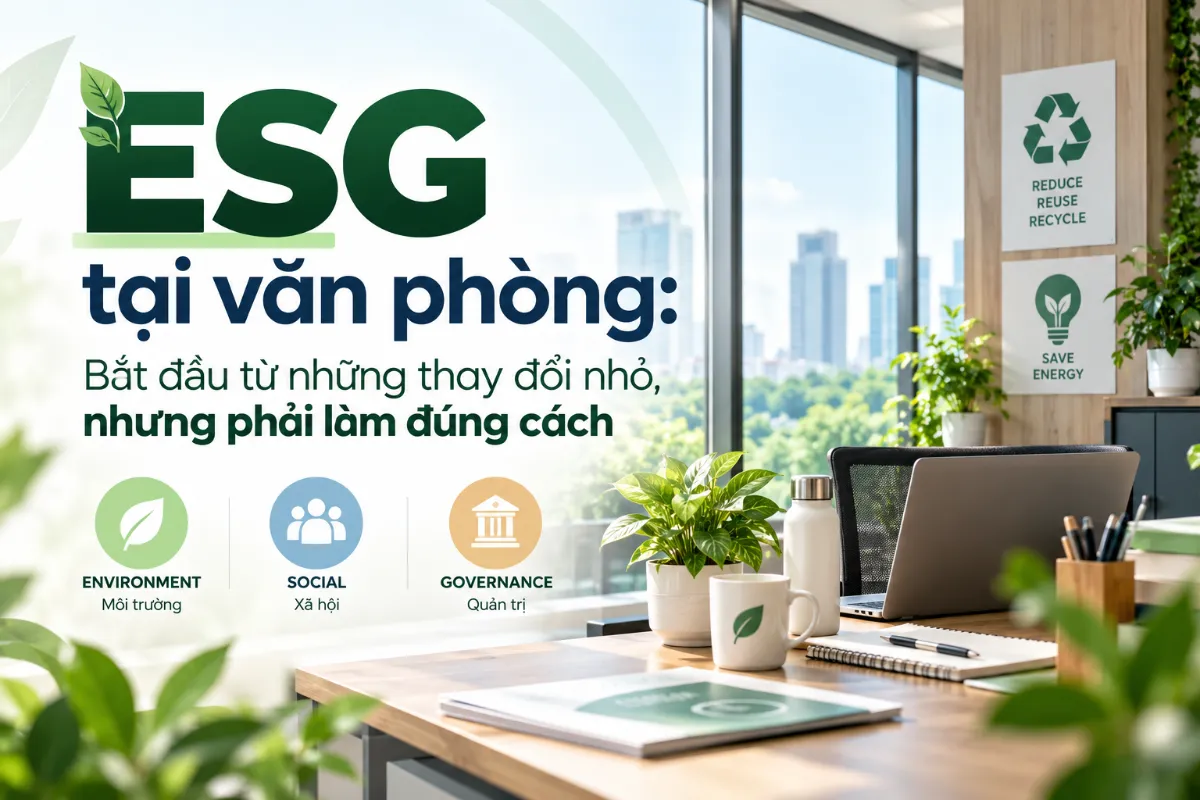
ESG stands for Environmental, Social, and Governance. It is a framework through which businesses can examine environmental issues, their responsibilities toward people, and the quality of their governance practices.
In an office environment, these three dimensions can be understood through practical examples.
Environmental (E) considerations include electricity and water consumption, paper usage, waste management, purchasing decisions, and efforts to reduce unnecessary environmental impacts.
Social (S) considerations include workplace safety, employee health and well-being, opportunities for employee participation, and engagement with local communities.
Governance (G) considerations include assigning responsibilities, establishing internal policies, ensuring transparent budget management, monitoring performance data, and evaluating outcomes.
For example, a company that aims to reduce disposable plastic cups is implementing an environmental initiative. However, when that initiative is supported by a responsible purchasing policy, a dedicated budget, clearly assigned roles, employee engagement, and measurable performance indicators, it also gains the governance foundation needed for long-term implementation.
This approach is consistent with the principles outlined by the Global Reporting Initiative (GRI). Under GRI 3: Material Topics 2021, organizations are expected to identify their significant impacts, explain how those impacts are managed, and monitor the effectiveness of their actions through objectives, indicators, and measurable results.
However, an important distinction must be made: workplace sustainability initiatives represent only one part of a company's overall ESG performance. They cannot replace assessments of environmental impacts from production, supply chains, labor practices, or other material governance issues.
2. Why Is the Workplace a Good Starting Point?
Not every company has the financial or organizational resources to launch large-scale sustainability projects immediately. For small and medium-sized enterprises (SMEs), starting with practical, affordable, and manageable improvements is often a more realistic approach.
The workplace offers a suitable environment because many daily activities are repetitive, observable, and relatively easy to improve.
Businesses can monitor monthly electricity consumption, track paper usage, review the use of disposable items, and survey employees about their commuting habits. Even basic data can help identify which issues deserve priority.
The workplace also provides opportunities to establish shared habits. When saving electricity or sorting waste becomes a normal part of office routines, employees no longer need to rely on occasional campaigns or repeated reminders.
However, an effective initiative should meet three essential conditions: it must be easy to implement, supported by a mechanism for long-term continuity, and accompanied by a method for evaluating results.
A campaign that attracts widespread participation does not necessarily create significant impact. Conversely, a less visible operational improvement that consistently reduces resource consumption over several months may deliver greater practical value.
3. Eleven Practical Ways to Build a Greener Workplace
3.1. Energy Efficiency: Beyond Reminding Employees to Turn Off the Lights
Electricity consumption is one of the most visible environmental concerns in office settings, particularly in workplaces that rely heavily on air conditioning, lighting systems, computers, and other electronic equipment.
Businesses can begin by reviewing how electricity is used across different areas, grouping switches by function, enabling automatic sleep modes on electronic devices, and assigning responsibility for checking equipment at the end of each working day.
According to guidance from ENERGY STAR, a program administered by the United States Environmental Protection Agency (EPA), enabling power management features on computers, printers, and other office equipment is among the low-cost measures that can help businesses improve energy efficiency.
Visual reminders placed near light switches, printers, and meeting rooms can also be useful. However, reminders alone are unlikely to deliver lasting results without changes to equipment management and operational procedures.
Companies should monitor monthly electricity consumption while considering factors such as working days, weather conditions, employee attendance, and occupied floor space before attributing any reduction directly to an energy-saving initiative.
3.2. Reducing Single-Use Plastics: Start by Reducing Consumption
Replacing disposable plastic cups with reusable bottles, reducing bottled water in meeting rooms, and encouraging reusable food containers are relatively simple workplace improvements.
However, replacing a plastic product with an item marketed as environmentally friendly does not automatically reduce environmental impacts.
A reusable bottle distributed to employees but rarely used may not deliver the expected benefits. Similarly, distributing new tote bags, insulated bottles, or other promotional products during every campaign may unintentionally increase overall consumption.
Before purchasing new items, businesses should consider whether existing products can be reused, how frequently replacements will be used, their durability, and how they will be managed at the end of their useful life.
The objective should be to reduce the actual consumption of disposable products, rather than simply counting how many environmentally themed gifts have been distributed.
3.3. Waste Separation: What Happens After Collection Matters
According to the World Bank's What a Waste 3.0 report, published in 2026, global municipal solid waste generation reached approximately 2.56 billion tonnes in 2022 and could increase to 3.86 billion tonnes by 2050 under a business-as-usual scenario.
These projections highlight the importance of preventing waste generation and improving waste management practices.
Within the workplace, businesses can establish waste separation points based on the types of waste actually generated, supported by clear and accessible instructions.
Used batteries, damaged electronic equipment, and other waste requiring special handling should be collected separately rather than mixed with general household waste.
Nevertheless, separating waste at the source only creates meaningful value when suitable collection and treatment arrangements are in place. If separated materials are subsequently mixed together without appropriate processing, the effectiveness of the initiative will be limited.
According to the waste management hierarchy promoted by the U.S. Environmental Protection Agency, preventing and reducing waste generation should take priority, followed by reuse, recycling, and other recovery or disposal methods.
Businesses should therefore aim not only to collect more recyclable materials but also to generate less waste in the first place.
3.4. Paper-Light Offices: Transforming Processes Rather Than Banning Printing
Digital transformation can help businesses reduce unnecessary printing while improving information management.
Activities such as document storage, internal approvals, task management, meeting documentation, and certain electronic signature processes can be conducted digitally where appropriate.
However, a paper-light office does not necessarily mean eliminating all printed documents.
Some documents may still require physical copies for legal, administrative, archival, or practical purposes. Digital systems also consume electricity and require electronic equipment and data storage infrastructure.
A more balanced approach involves identifying processes that rely unnecessarily on paper, digitizing suitable activities, and avoiding technology investments that exceed actual operational needs.
Indicators such as the number of pages printed each month, the proportion of documents processed digitally, and the time required to complete administrative tasks can help businesses evaluate progress.
3.5. Water Conservation: Starting with Shared Facilities
Water consumption often receives less attention than electricity usage and waste management in workplace sustainability campaigns, even though it is another important resource.
Companies can begin by identifying and repairing leaks, replacing faulty taps, selecting water-efficient fixtures when upgrades are necessary, and encouraging responsible water use.
In shared pantry areas, simple measures such as using only the water needed, operating washing equipment efficiently, and maintaining facilities regularly can help reduce unnecessary consumption.
For businesses operating in leased offices or shared buildings, measuring water consumption may be challenging without individual meters.
In such cases, companies can work with building management to establish appropriate monitoring arrangements instead of reporting estimated savings that cannot be substantiated.
3.6. Responsible Procurement: Sustainability Begins with Purchasing Decisions
A greener office is shaped not only by how products are used but also by how they are selected and purchased.
When procuring stationery, furniture, electrical equipment, or event materials, businesses can consider product durability, repairability, actual demand, packaging requirements, and end-of-life management.
For larger purchases, companies may also review product origin, manufacturing conditions, environmental standards, and suppliers' social and environmental responsibilities.
A desk that remains functional for many years may be a more responsible choice than repeatedly replacing furniture to follow interior design trends.
Likewise, using existing stationery supplies before purchasing new products marketed as sustainable is often a more practical approach.
Sustainable procurement is not simply about buying products labeled as environmentally friendly. It is about purchasing what is genuinely needed while considering impacts throughout the product's life cycle.
3.7. Greener Workspaces: Considering Both the Environment and People
Indoor plants, natural lighting, and well-designed relaxation areas can help create a more pleasant working environment.
Businesses may introduce greenery into shared spaces, select plants suited to indoor lighting conditions, and assign responsibility for their care.
However, indoor plants should not be treated as substitutes for effective ventilation systems or appropriate indoor air quality management.
A healthy workplace also depends on temperature, lighting, noise levels, hygiene, safety, and the accessibility and functionality of shared spaces.
This illustrates the connection between the environmental and social dimensions of ESG. A well-designed workplace should not only consider resource efficiency but also respond to employees' practical needs.
3.8. Sustainable Commuting: Making Greener Choices More Accessible
Daily commuting is another area worth considering in a company's sustainability efforts.
According to information published by the United Nations Environment Programme (UNEP) in 2024, the transport sector accounts for approximately 15% of global greenhouse gas emissions.
At the organizational level, possible measures include encouraging public transport, supporting carpooling, holding virtual meetings when appropriate, and introducing flexible working arrangements for suitable roles.
However, employees do not always have equal access to lower-emission transport options.
Commuting distances, public transport availability, traffic conditions, working hours, and job requirements may all affect individual choices.
Businesses should focus on making sustainable options more accessible and encouraging voluntary participation rather than introducing rigid performance targets based on employees' transport choices.
3.9. Responsible Consumption in Shared Spaces: Reducing Everyday Waste
Office kitchens, pantry areas, and shared dining spaces are common sources of small but recurring consumption activities.
Overordering food for meetings, routinely providing disposable utensils, and purchasing items for events lasting only a few hours can contribute to unnecessary waste.
Businesses can improve these practices by confirming attendance before ordering meals, prioritizing reusable utensils, providing suitable washing and storage facilities, and maintaining appropriate food safety procedures.
Internal celebrations, staff gatherings, and conferences can also be organized with fewer single-use decorations and greater use of existing equipment and materials.
The objective is to reduce unnecessary consumption without undermining activities that support employee well-being and team cohesion.
3.10. Internal Green Campaigns: Encouraging Participation Without Chasing Numbers
Programs such as the "21-Day Green Habits Challenge," "Zero Waste Week," or "Green Friday" can be effective starting points for companies that have not previously implemented workplace sustainability initiatives.
These campaigns may combine internal communications, practical activities, and friendly challenges between departments.
For example, a 21-day program might encourage employees to bring reusable bottles, avoid unnecessary printing, and adopt simple resource-saving habits.
Companies can monitor participation, share successful practices, and evaluate outcomes when the campaign concludes.
Gamification—the application of game-like elements to non-game activities—can be introduced through points, challenges, or team recognition.
However, competition should not create unnecessary pressure.
Requiring constant photographic evidence, applying unfair scoring systems, or collecting excessive personal information may discourage participation.
An effective campaign should provide a positive experience, respect voluntary engagement, and help beneficial habits continue after prizes and competitions have ended.
3.11. Connecting Workplace Initiatives with Communities: Extending Social Responsibility
Once internal sustainability practices become more established, businesses can expand employee participation through community initiatives aligned with their broader sustainability priorities.
These may include environmental conservation, educational support, improvements to living conditions, or volunteering programs designed around the actual needs of local communities.
However, not every charitable activity automatically qualifies as an effective ESG initiative.
For example, a tree-planting program should consider site selection, appropriate tree species, long-term maintenance, and survival rates.
Similarly, a book donation program should take into account the needs of recipient institutions, the suitability of donated materials, and their continued use over time.
The number of trees planted, gifts distributed, or volunteers mobilized primarily reflects the scale of an activity.
To understand its long-term value, businesses must also consider what meaningful changes have occurred as a result.
This is where Corporate Social Responsibility (CSR) initiatives can be connected with the impact-oriented approach associated with ESG.
4. From Campaigns to Systems: How Can Businesses Measure Progress?
One common challenge is that businesses may organize numerous activities without collecting enough data to determine whether those initiatives are genuinely effective.
For instance, if an energy-saving campaign is followed by a 10% reduction in monthly electricity bills, can the entire reduction be attributed to the campaign? Not necessarily.
Electricity consumption may also be influenced by weather conditions, the number of working days, employee attendance, or changes in equipment usage.
Businesses should therefore select a manageable set of indicators and monitor them under reasonably comparable conditions.
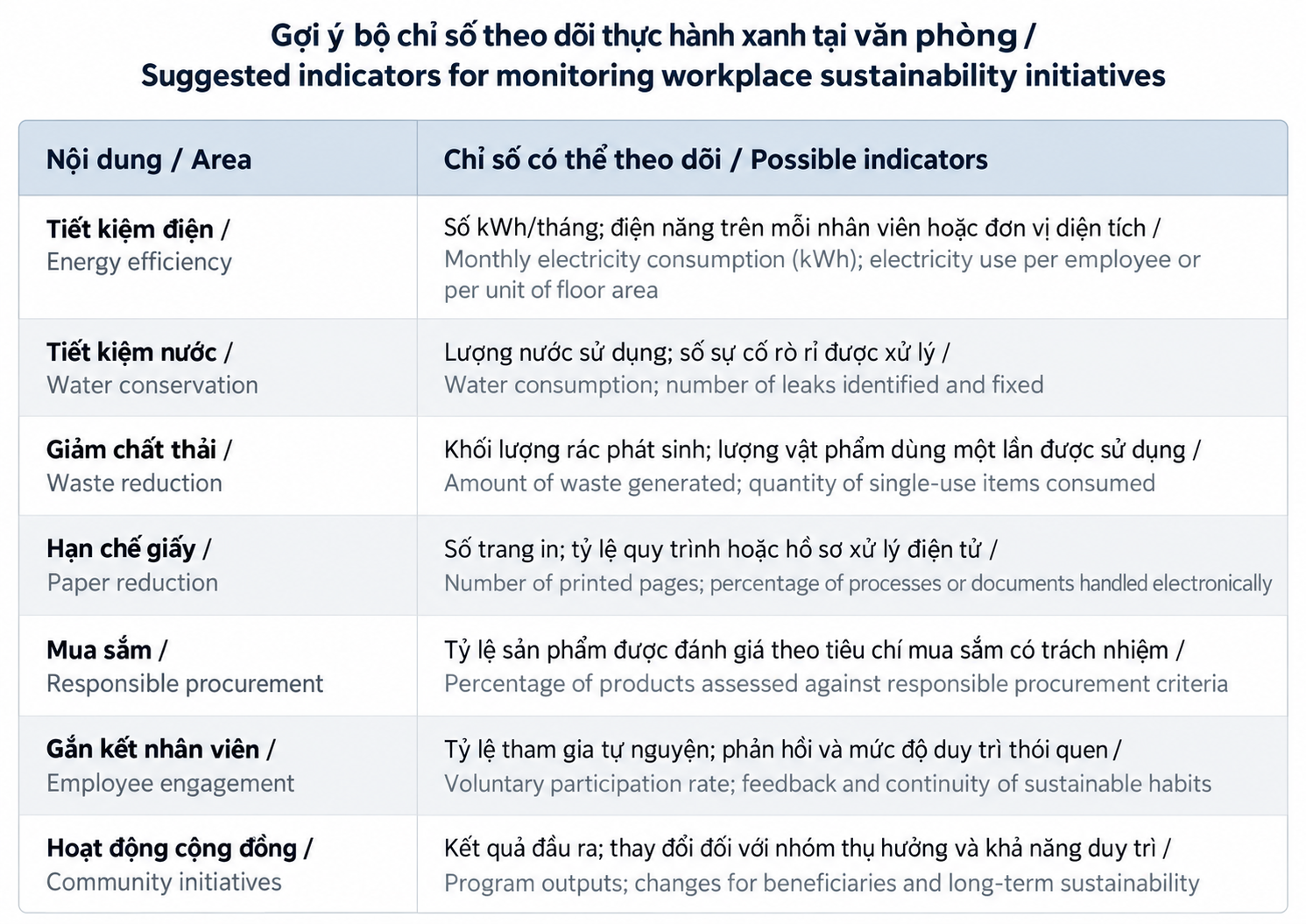
These indicators are suggestions rather than mandatory ESG standards or a universal scoring system applicable to every business.
For priority issues, companies should establish baseline data, define objectives, specify implementation periods, and agree on data collection methods before launching initiatives.
For example, a company might aim to reduce the number of disposable plastic cups consumed each month rather than simply targeting 100% employee participation in a sustainability campaign.
When reporting results, businesses should explain what has been achieved, the challenges encountered, the resources invested, and the issues that remain unresolved.
Measurement should not be about making a sustainability report look more impressive. It should help businesses understand what is actually changing and where improvements are still needed.
5. A Practical 90-Day Roadmap for Getting Started
Businesses do not need to implement every solution at once. For organizations that have not yet established internal environmental programs, a 90-day pilot can provide a manageable starting point without placing excessive pressure on available resources.
Days 1–30: Assess the Current Situation and Set Priorities
The company reviews electricity and water consumption, paper usage, waste generation, and daily resource-use habits.
Employees may also be surveyed to identify common issues, feasible improvements, and practical barriers.
At this stage, businesses should select approximately two or three priority areas and assign departments or individuals to monitor implementation.
Days 31–60: Test Practical Improvements
The company begins introducing selected measures, such as adjusting equipment settings, changing printing practices, or reducing disposable products.
Internal communications and employee challenges can help encourage participation.
Relevant data should be collected consistently, without creating excessive administrative work for employees.
Days 61–90: Evaluate Results and Establish Long-Term Practices
After the pilot, the company compares results against baseline data, gathers employee feedback, and reviews implementation costs.
Successful measures can be incorporated into routine operations, while activities that prove unsuitable should be adjusted or discontinued.
A 90-day period is not sufficient to assess every environmental impact. However, it can help businesses establish a practical management approach before expanding their sustainability programs.
6. Leadership and Governance: The Foundations of Lasting Change
Whether a workplace sustainability initiative is introduced by employees or the human resources department, leadership involvement remains essential.
If a company encourages paper reduction while continuing to require unnecessary printed copies for every approval process, employees will find it difficult to change their habits.
Similarly, if employees are encouraged to reduce plastic consumption while internal purchasing procedures continue to prioritize disposable products, the organization's message becomes inconsistent.
Building a greener workplace is therefore not solely an individual responsibility.
It requires coordination among administration, human resources, procurement, operations, and other relevant departments.
Decisions concerning budgets, assigned responsibilities, and performance evaluation methods should also be aligned.
From an ESG perspective, this demonstrates the relationship between governance and environmental performance: for an initiative to remain effective, it needs appropriate operational and management mechanisms.
In addition, workplace sustainability programs should respect employees' rights and well-being.
Environmental objectives should not become a source of unreasonable pressure, uncompensated responsibilities outside employees' normal duties, or unfair expectations across different employee groups.
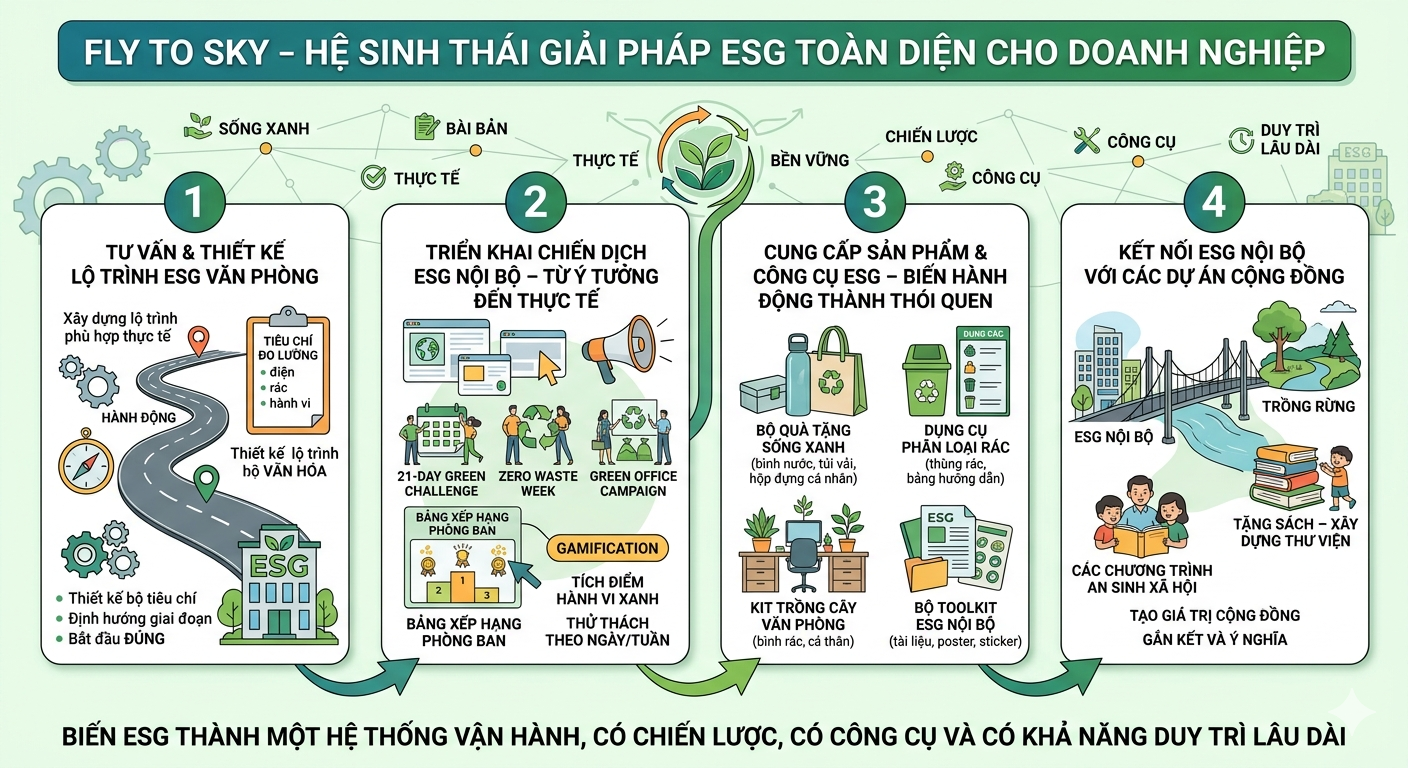
7. Fly To Sky: Connecting Workplace Sustainability with Community Impact
For many businesses, the greatest challenge is not a lack of green ideas but determining which initiatives are appropriate, how they should be implemented, and what value they can actually create.
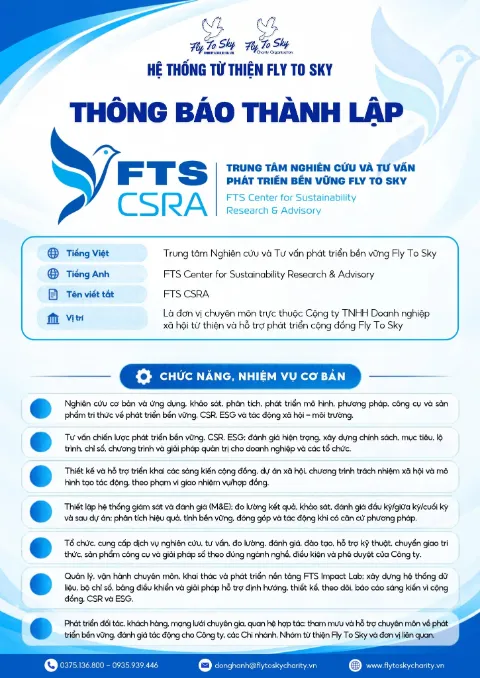
Drawing on its experience in community development projects and social resource mobilization, the Fly To Sky Charity Network seeks to support businesses in designing CSR and sustainability initiatives that respond to practical needs.
Through the Fly To Sky Center for Sustainability Research and Advisory (FTS CSRA) and the research and impact measurement orientation of FTS Impact Lab, this approach emphasizes the relationship between objectives, implementation methods, and measurable outcomes.
Within the workplace, collaboration can be tailored to specific organizational needs, including assessing current practices, developing internal communication programs, organizing sustainability challenges, and establishing indicators to monitor, evaluate, and improve performance.
Supporting materials such as practical guides, communication resources, waste separation tools, and durable reusable products may be considered where genuinely needed.
The objective is to help businesses establish sustainable practices rather than treating the distribution of additional products as the main achievement of an ESG campaign.
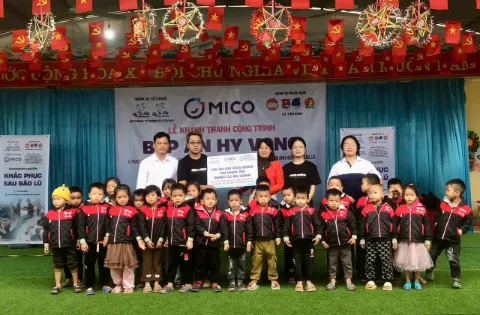
Beyond internal operations, businesses can connect workplace sustainability efforts with community initiatives in environmental protection, education, social welfare, and livelihood development.
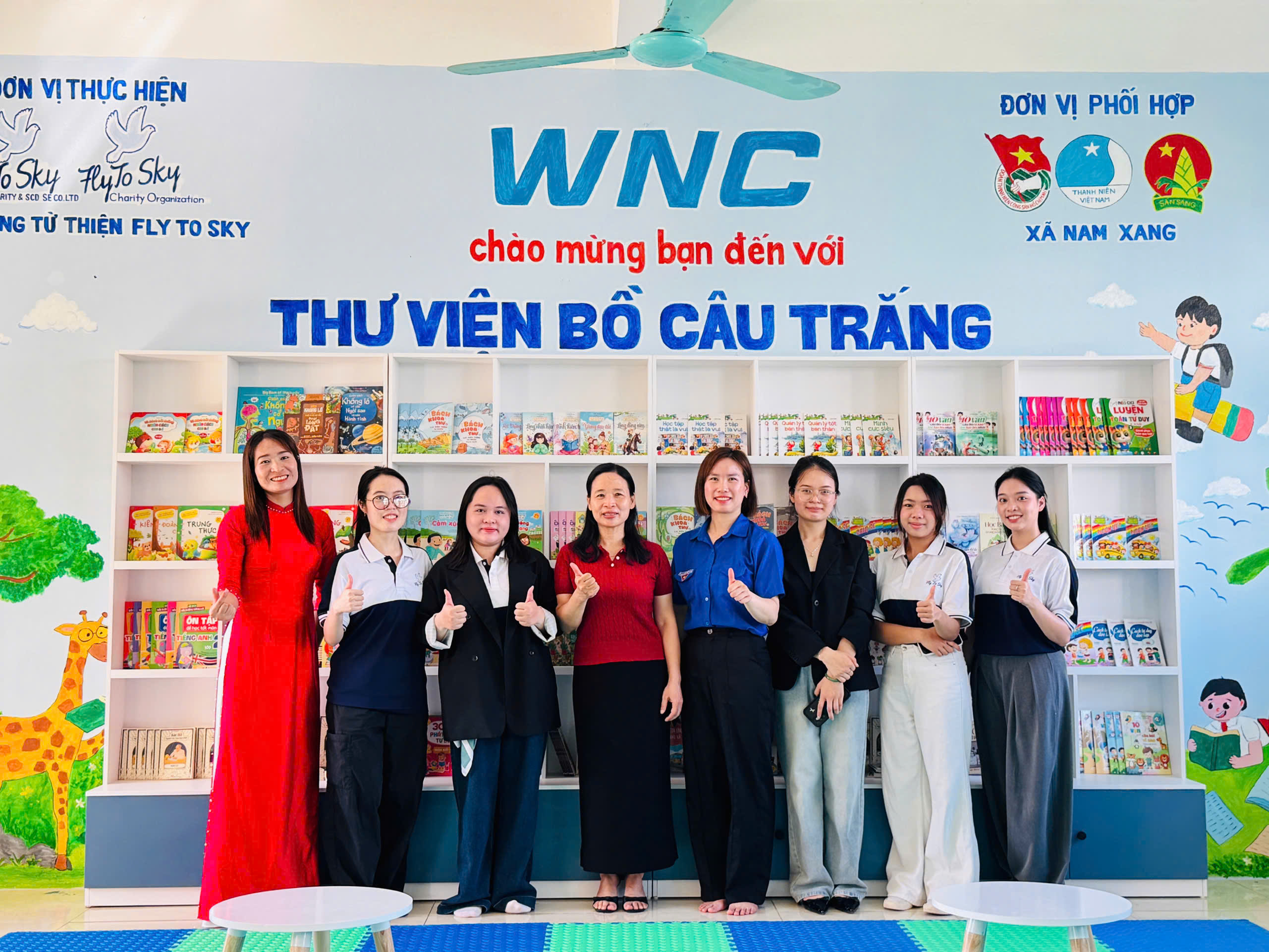
For example, through the White Dove Bookshelf Project (Dự án Tủ sách Bồ câu trắng), businesses can collaborate with Fly To Sky to improve children's access to books and reading spaces.
Environmental initiatives, meanwhile, should be designed around local ecological conditions, community priorities, and the capacity to maintain outcomes after the initial activities have concluded.
What matters is that each initiative has clear objectives, well-defined responsibilities, and evaluation methods proportionate to its scale and purpose.
Not every company needs to launch a major CSR program.
A smaller business may begin by improving its internal operations and gradually participating in community initiatives that align with its financial capacity, workforce, and business priorities.
The value of a meaningful partnership lies not only in successfully organizing an activity, but also in helping businesses understand what changes they are creating, who benefits from those changes, and how long the positive outcomes can be sustained.
8. Common Mistakes to Avoid When Implementing Workplace ESG Initiatives
Growing interest in sustainability also creates a greater need for accuracy and responsibility in how businesses communicate their achievements.
A company should not claim to have achieved carbon neutrality simply because it organized a tree-planting event.
Likewise, replacing a limited number of plastic products does not mean that all workplace operations have become sustainable.
Claims relating to emissions reductions or environmental benefits should be supported by appropriate evidence and reliable calculation methods.
Businesses should also avoid prioritizing the number of activities over their effectiveness, excessively distributing products marketed as green, or introducing targets that do not reflect organizational realities.
A small initiative supported by reliable data, employee participation, and sustained improvements may provide a stronger foundation for future ESG efforts than an ambitious campaign with little lasting impact.
More importantly, positive workplace achievements should never be used to distract from unresolved environmental, social, or governance issues elsewhere in a company's operations.
Conclusion: Sustainability Begins with Everyday Business Decisions
A green workplace does not necessarily require an abundance of indoor plants, expensive environmentally marketed products, or a continuous schedule of environmental campaigns.
Sometimes, meaningful progress begins with using electricity more efficiently, reducing unnecessary purchases, improving procurement practices, or creating opportunities for employees to help make their workplace more sustainable.
However, the true value of these actions lies not simply in short-term enthusiasm, but in their ability to deliver measurable improvements over time.
Businesses can start small, provided they identify the right priorities, assign responsibility, use resources wisely, and remain willing to evaluate and refine their approach.
Sustainability is reflected not only in what a company promises to do, but also in how it operates, manages resources, and treats people every day.
The workplace can be the starting point. A meaningful ESG journey, however, must eventually extend to the broader decisions that shape business operations and the company's relationship with society.
References
Global Reporting Initiative (GRI). GRI 3: Material Topics 2021.
World Bank (2026). What a Waste 3.0: Global Snapshot of Solid Waste Management toward Circularity until 2050.
U.S. Environmental Protection Agency (EPA). Sustainable Materials Management: Waste Management Hierarchy.
ENERGY STAR. Checklists of Energy-Saving Measures.
United Nations Environment Programme (UNEP, 2024). Sectoral Solution to Climate Change: Transport.
This article has been edited by Sustainability 360° (Bền vững 360°) to provide accessible insights and practical guidance on sustainable business practices. The suggested measures and performance indicators are intended for reference and should be adapted to each organization's operational context and specific circumstances.