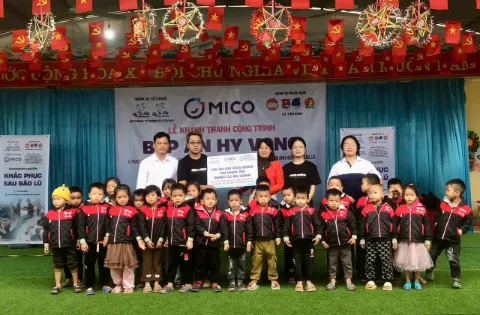
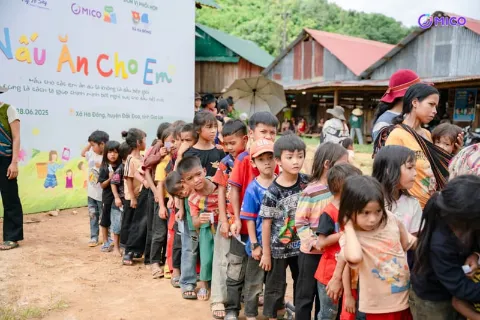
As part of the program, the organizers set up 10 “zero-cost” booths, distributed 150 gift packages to disadvantaged residents and children, and organized four game and recreational activity booths for local children. More than 600 bowls of Vietnamese crab noodle soup were prepared and served to local residents, alongside more than 4,000 Want Want confectionery products.
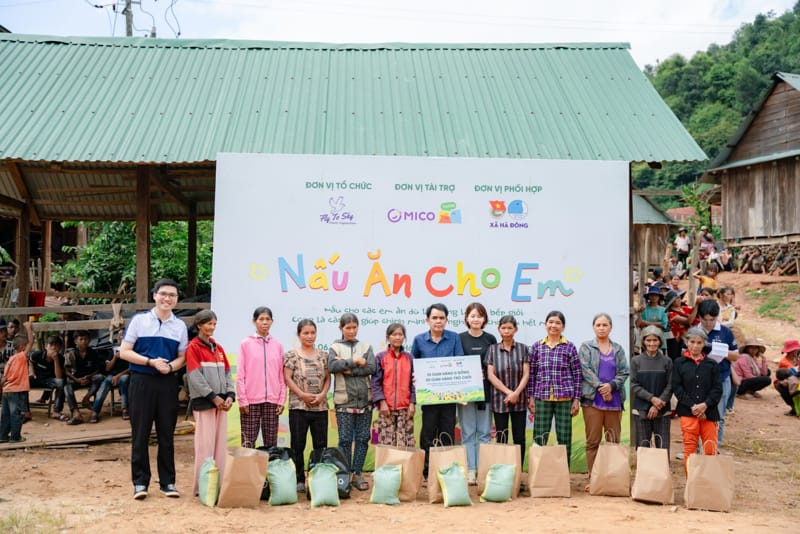
The scale of the meal distribution was expanded in response to the needs expressed by the local community. The program was initially planned to prepare 150 portions of crab noodle soup for children. However, after discussing with the village head and learning about the community's wish to participate together, Mico Vietnam and Fly To Sky decided to increase the number to more than 600 bowls.
The adjustment demonstrated the importance of listening to local needs when implementing community initiatives. Rather than applying a fixed support model, the program was adapted to actual circumstances, expanding the number of beneficiaries and strengthening connections among participating stakeholders.
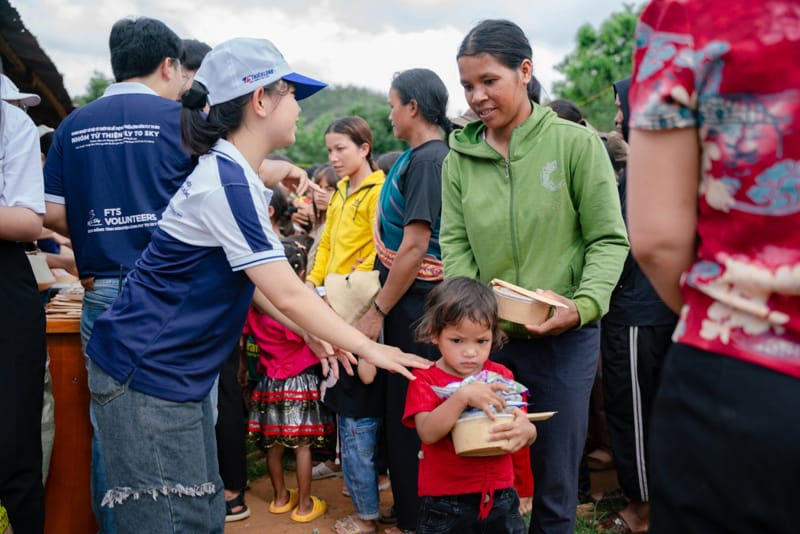
For communities that continue to face economic challenges and limited access to social resources, community support programs can carry significance beyond material assistance. Activities such as “zero-cost” booths, community meals and children's recreational activities create opportunities for residents and children to participate, interact and build connections.
Comments from local residents about experiencing a large-scale community event in the area for the first time and having access to a more substantial meal also highlighted existing differences in access to community activities and resources. In this context, community initiatives can play a complementary role by bringing social resources closer to groups with more limited access.
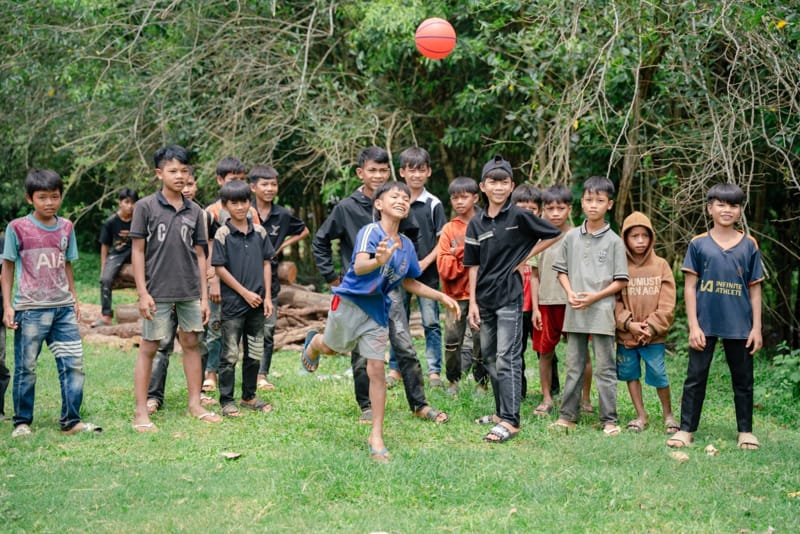
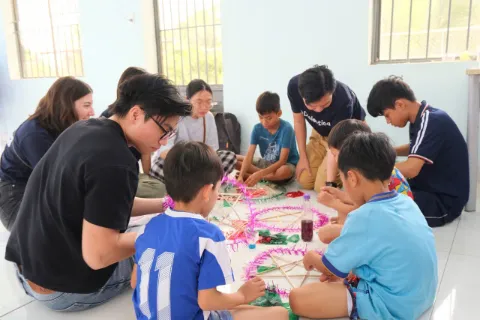
In addition to direct assistance, the program provided opportunities for local children to participate in recreational and social activities. Combining material support with interactive activities allowed the initiative to address different aspects of community well-being, ranging from immediate needs to children's social and emotional experiences.
From a corporate social responsibility (CSR) perspective, the participation of Mico Vietnam and other supporting organizations demonstrated how corporate resources could be connected with specific community needs. When companies contribute not only resources but also participate directly in organizing and implementing activities, CSR can serve as a means of strengthening corporate-community engagement and generating tangible social impact.
The “Cooking for Children” program was supported by Mico Vietnam, Want Want Vietnam and other participating organizations. Contributions in the form of food, gifts and organizational resources helped create a community-oriented day for local residents and children.
What began as a meal prepared for children was expanded into a broader community support initiative. This approach highlighted the value of designing CSR programs around actual community needs, where support extends beyond donations to creating opportunities for participation and connection.
As corporate social responsibility is increasingly viewed through the lens of long-term impact, initiatives supporting disadvantaged communities can contribute to narrowing gaps in access to resources, strengthening community cohesion and promoting mutual support at the local level.
For further information, please contact:
FLY TO SKY CHARITY NETWORK
FLY TO SKY CHARITY AND COMMUNITY DEVELOPMENT SUPPORT SOCIAL ENTERPRISE COMPANY LIMITED
Fly To Sky Charity Organization - A member of the National Volunteer Networks, under the Vietnam National Volunteer Center (Ho Chi Minh Communist Youth Union Central Committee)
- Organizations wishing to accompany, collaborate, sponsor or seek consultation on CSR and ESG Projects can contact 0935.939.446 or email [email protected] – [email protected]
- Website: flytoskycharity.vn
References
- Nấu ăn cho em đồng hành cùng người dân, thanh thiếu nhi khó khăn xã Hà Đông ↗ (accessed 2025-07-02)