Acacia wood is currently the primary raw material for Vietnam's paper industry, accounting for approximately 70% of total input materials. Every year, millions of tonnes of wood chips are used to produce pulp and supply export markets. However, processing also generates large quantities of by-products, including wood chip fragments, small wood pieces and waste materials from screening, chip washing and raw material treatment. Much of this by-product stream remains underutilized, resulting in resource waste and increasing pressure on waste treatment systems.
Against this backdrop, Associate Professor Le Quang Dien and his research team at Hanoi University of Science and Technology have carried out a project entitled “Research on Technology for Producing Single-Cell Protein from Paper Industry By-products and Its Application in Animal Feed Production”. The research aims to convert wood waste into high-value raw materials, opening up new opportunities for recycling paper industry by-products while helping reduce waste, improve resource-use efficiency and promote sustainable production through a circular economy model.
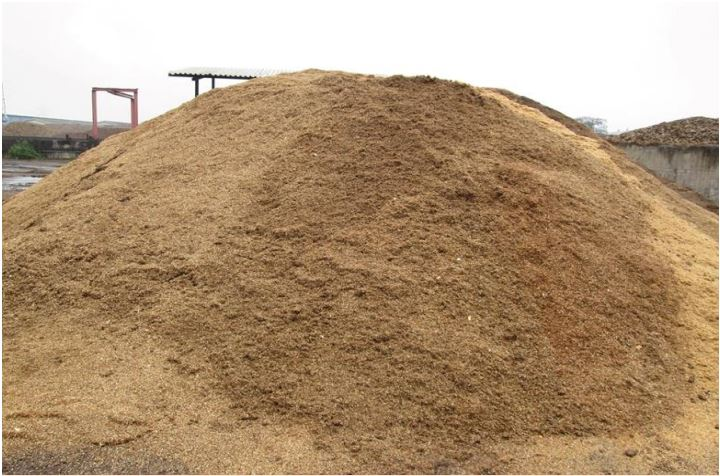
According to Associate Professor Le Quang Dien, wood waste in the form of fragmented wood chips generated at pulp mills and wood processing facilities can amount to thousands of tonnes annually. Most of these by-products are currently used to produce fuel pellets, industrial boards or solid fuel. Although some of the waste has been put to use, the economic value generated remains relatively low compared with the actual potential of this lignocellulose-rich resource. Notably, fragmented wood chips are easy to collect and store and are relatively resistant to biodegradation. This makes them a suitable biomass source for conversion into high-value biological products rather than being used solely as fuel.
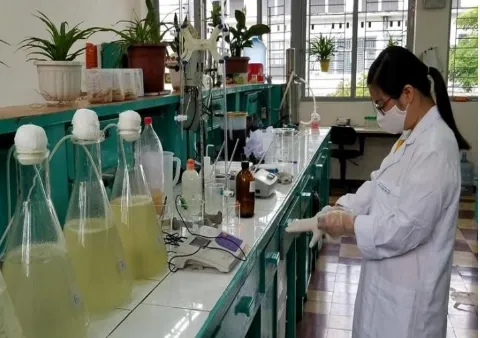
Building on this practical need, the research team selected Acacia mangium wood waste as the input material for developing a single-cell protein production process. The technology uses biochemical methods to break down the lignocellulose in wood into simple sugars such as glucose and xylose. These sugars then serve as a nutrient medium for yeast growth, generating protein-rich biomass.
Following the research process, the team successfully selected yeast strains capable of growing well on sugars derived from wood waste. It also developed a technological process and equipment model for semi-industrial-scale single-cell protein production, with a capacity of 1,000 litres of fermentation broth per batch.
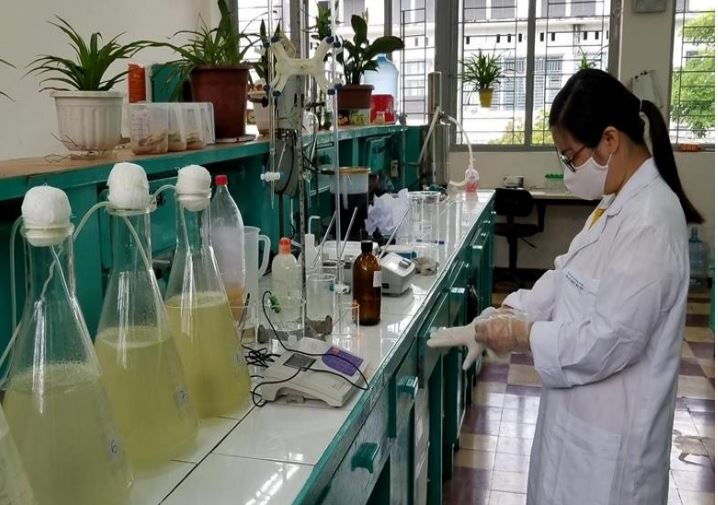
Notably, the process is based on advanced international technologies for converting lignocellulosic materials into microbial protein, but has been adapted to suit Vietnam's raw material and production conditions. According to the research team, no similar technology has yet been implemented in Vietnam. The approach is also considered novel internationally, as it uses sugar-rich hydrolysate obtained from wood through enzymatic saccharification as a substrate for yeast cultivation.
The team's experimental results also indicate that livestock fed diets supplemented with single-cell protein achieve good nutrient absorption and higher weight-gain rates than those fed conventional diets. The resulting protein product is comparable in quality to many products manufactured at industrial scale worldwide and is suitable for use as a feed additive for pigs, chickens and other livestock.
Adding Value to Waste
Vietnam still imports large quantities of protein-rich raw materials, such as soybean meal, fishmeal and other protein products, to support animal feed production. Meanwhile, single-cell protein is considered a protein source of the future thanks to its rapid production cycle, limited dependence on land resources and ability to utilize various types of waste and by-products.
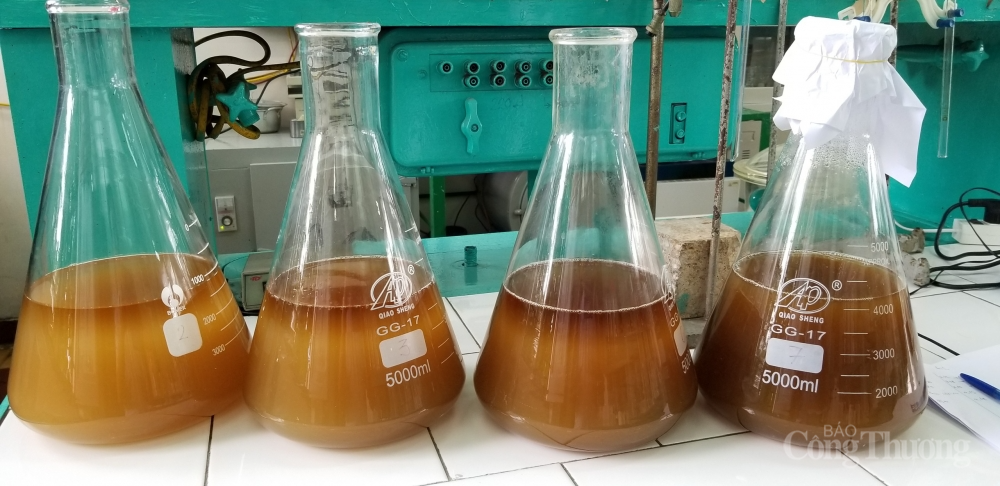
Therefore, the success of this research project is significant not only in scientific and technological terms but also as a clear demonstration of the circular economy model in the processing industry. Rather than becoming waste or being used solely for low-value purposes, wood waste from the paper industry is recycled into an input material for a new production chain. This process extends the lifecycle of resources, reduces environmental pressure and creates products with significantly higher economic value.
Experts believe that, if commercialized and scaled up, the technology for producing single-cell protein from paper industry by-products could help establish a value chain linking the paper industry, biotechnology and livestock production. It also represents a typical example of the shift from waste treatment towards resource recovery from waste, in line with Vietnam's goals of developing a circular economy, promoting green growth and achieving sustainable production.
As the green transition becomes increasingly urgent, research such as that conducted by Associate Professor Le Quang Dien and his colleagues not only delivers new technological solutions but also demonstrates the enormous potential of turning waste into resources. From seemingly worthless wood fragments, a valuable source of protein has been produced, contributing to the sustainable development of both Vietnam's industrial and agricultural sectors.
References
- SCP I https://scp.gov.vn/tin-tuc/t24612/tai-che-phe-phu-pham-nganh-giay-thanh-thuc-an-chan-nuoi I 2026-11-04