According to statistics from the Ministry of Agriculture and Environment, Vietnam is among the 20 countries with the highest consumption of plastic packaging and plastic bags, using more than 30 billion plastic bags annually and generating approximately 1.8 million tonnes of plastic waste each year. Most of these products are made from petroleum-based plastics, which are difficult to decompose under natural conditions and can persist for hundreds of years if not properly collected and treated. This places increasing pressure on waste management systems while raising the risks of soil, water and marine pollution.
Meanwhile, the shift towards sustainable production and consumption requires businesses to gradually transition to renewable or biodegradable materials, reduce their dependence on fossil resources and limit post-consumer waste. This is also one of Vietnam's key priorities in pursuing a circular economy and reducing greenhouse gas emissions.
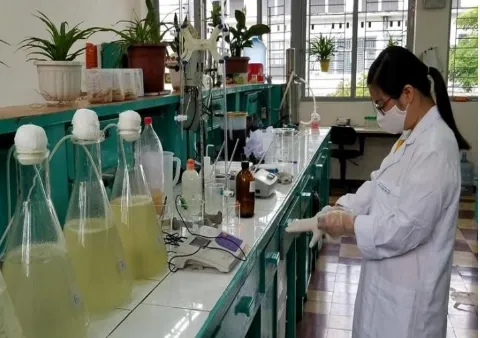
In response to this practical need, Prof. Dang Thi Kim Chi and her colleagues at the Vietnam Association for Conservation of Nature and Environment (VACNE) conducted a research project entitled “Research on Technology for Manufacturing Fully Biodegradable Plastic Films Based on Vietnamese Cassava Starch Blends”. The project aims to manufacture plastic films from blends of cassava starch and polybutylene adipate terephthalate (PBAT) for use in household and agricultural packaging.
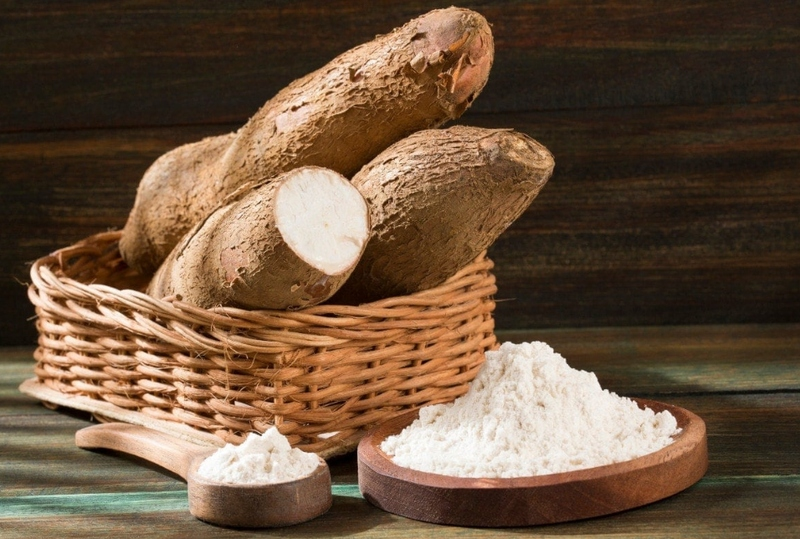
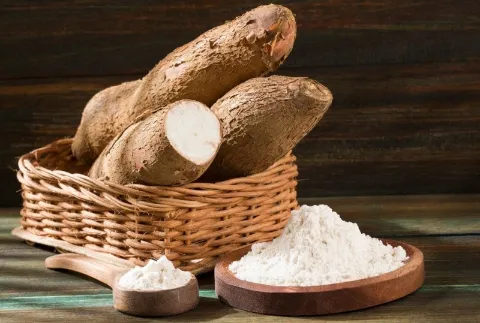
Unlike conventional plastics, cassava starch is a renewable raw material that can biodegrade naturally and is competitively priced. However, to meet requirements for mechanical strength, processability and practical applications in packaging production, the research team combined cassava starch with the biodegradable polymers PBAT and PLA, while also investigating starch modification processes to produce materials with properties suitable for plastic film manufacturing.
The research results show that the team successfully produced modified thermoplastic starch (TPS) pellets from Vietnamese cassava starch. The process used a mixture of glycerol and sorbitol as plasticizers at an 80:20 ratio, with a total content of 20%, combined with 2.4% citric acid as a modifying agent. The resulting thermoplastic starch pellets achieved a melt flow rate of 0.72 g/10 min, meeting the requirements for manufacturing polymer blends.
Subsequently, using a two-stage melt-blending process on a twin-screw extruder, biodegradable plastic pellets were produced from a mixture of modified TPS, PBAT and PLA. At a TPSCA/PBAT/PLA blending ratio of 40/54/6 by weight, the pellets achieved a melt flow rate of 2.64 g/10 min and a melting temperature of 138°C. These parameters are well suited to blown-film processing applications.
According to the research findings, the team successfully developed both a process for manufacturing modified thermoplastic cassava starch pellets and a production process for fully biodegradable plastic films and garbage bags. This represents an important foundation for future industrial-scale applications and the gradual replacement of widely used, non-biodegradable plastic products.
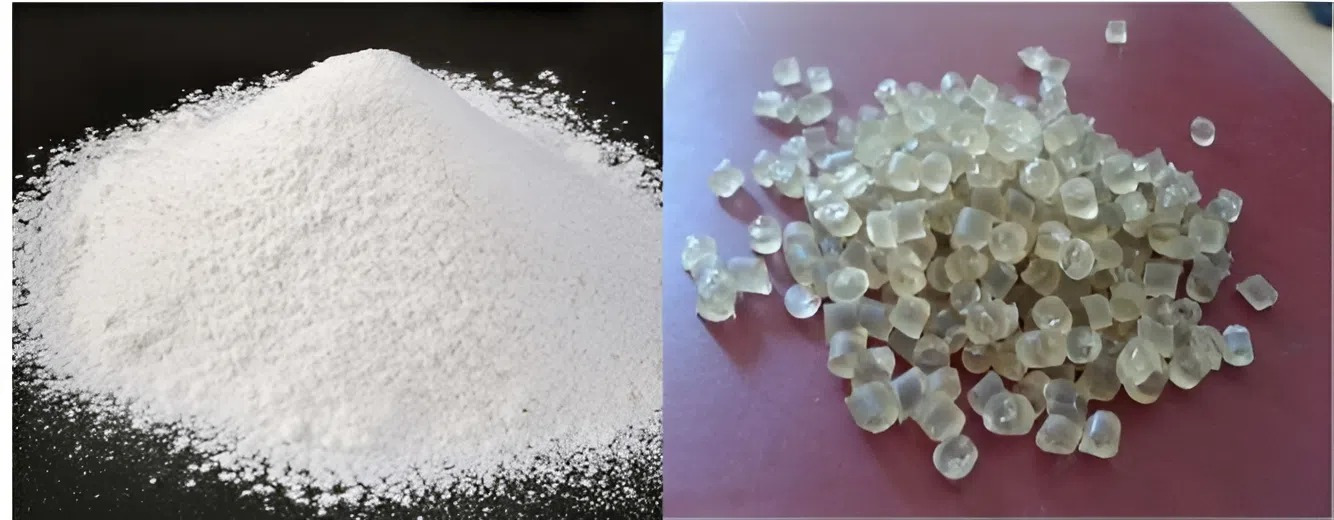
Building on these results, biodegradable plastic films made from PBAT and cassava starch blends were successfully manufactured using conventional blown-film equipment. The finished films demonstrated stable mechanical properties, with a tensile strength of 17.4 MPa and an elongation at break of 220%, comparable to those of conventional polyethylene (PE) films currently in widespread use.
In terms of environmental performance, PBAT/TPS-CA blend films were confirmed to be fully biodegradable, breaking down into CO₂, H₂O and organic compost in accordance with ASTM D6400. Tests under controlled aerobic composting conditions showed that the material achieved 96% disintegration after 53 days and 91% conversion into CO₂ after 155 days, meeting the requirements of TCVN 9493.
According to experts, the transition to a circular economy involves more than simply increasing waste recycling efforts; it must also begin at the product design stage and with the selection of raw materials.
Bio-based materials that can biodegrade at the end of their useful life help reduce the amount of waste remaining in the environment while lowering the demand for fossil resource extraction to manufacture conventional plastics.
In the long term, alongside raising consumer awareness of environmentally friendly product choices, research projects such as that led by Prof. Dang Thi Kim Chi will help lay the foundation for the development of Vietnam's bio-based materials industry, add value to domestic raw materials and make a practical contribution to the country's goals of achieving sustainable production and consumption.
References
- SCP I https://scp.gov.vn/tin-tuc/t24629/bien-tinh-bot-san-thanh-mang-nhua-phan-huy-sinh-hoc-thuc-day-vat-lieu-xanh-cho-kinh-te-tuan-hoan I 2026-11-04