In recent years, plastic waste and single-use packaging have become major environmental challenges. In response, the search for alternative solutions using environmentally friendly materials has emerged as a growing trend in sustainable production and consumption.
In Vietnam, alongside paper and bio-based packaging materials, various initiatives have focused on making use of natural resources readily available in agriculture. Among these, lotus leaf paper bags offer an example of how natural materials can be combined with creative design to produce more sustainable packaging products.
The lotus is a familiar plant in the cultural and economic life of many agricultural regions in Vietnam, particularly in the Mekong Delta. For generations, different parts of the lotus plant have been used for various purposes, including food, medicinal ingredients, and beverage production. However, not every part of the plant has been fully utilized. While lotus seeds, roots, and flowers are widely used, lotus leaves in many areas are still primarily used in food preparation or as wrapping materials. Researching the application of lotus leaves as a new material for consumer products is therefore considered a promising approach to increasing the value of the lotus plant.
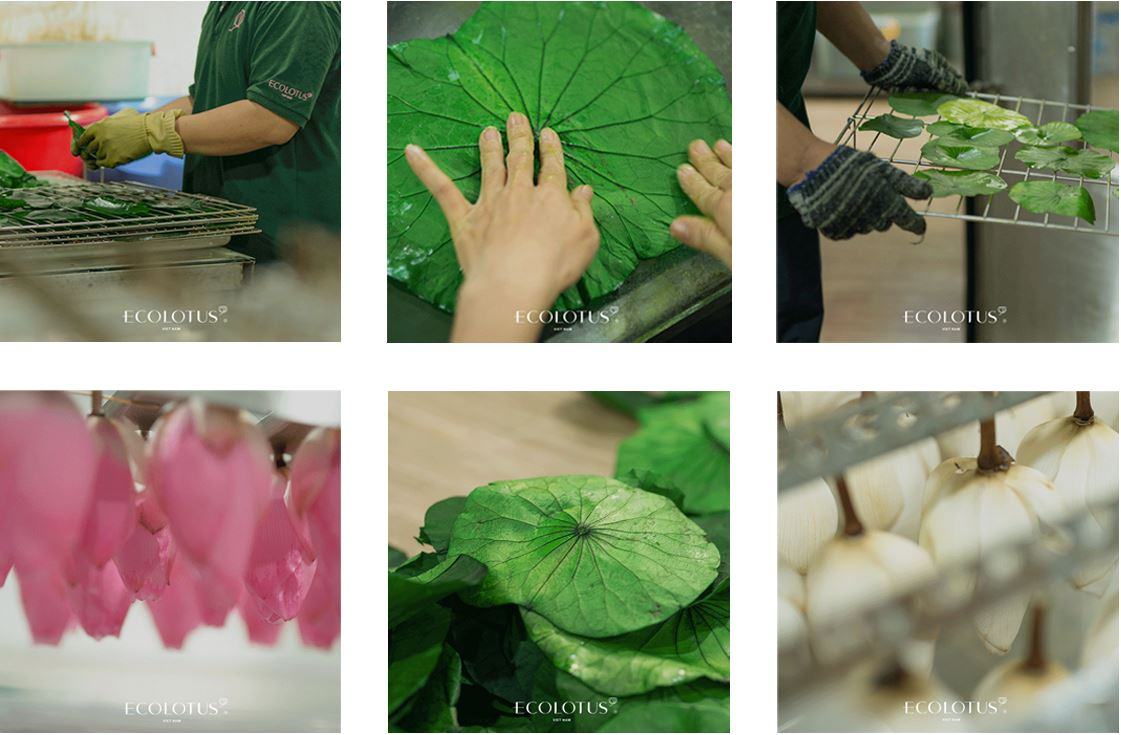
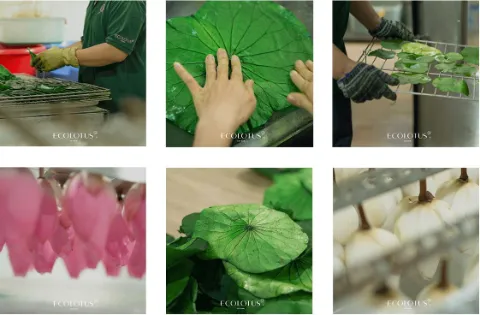
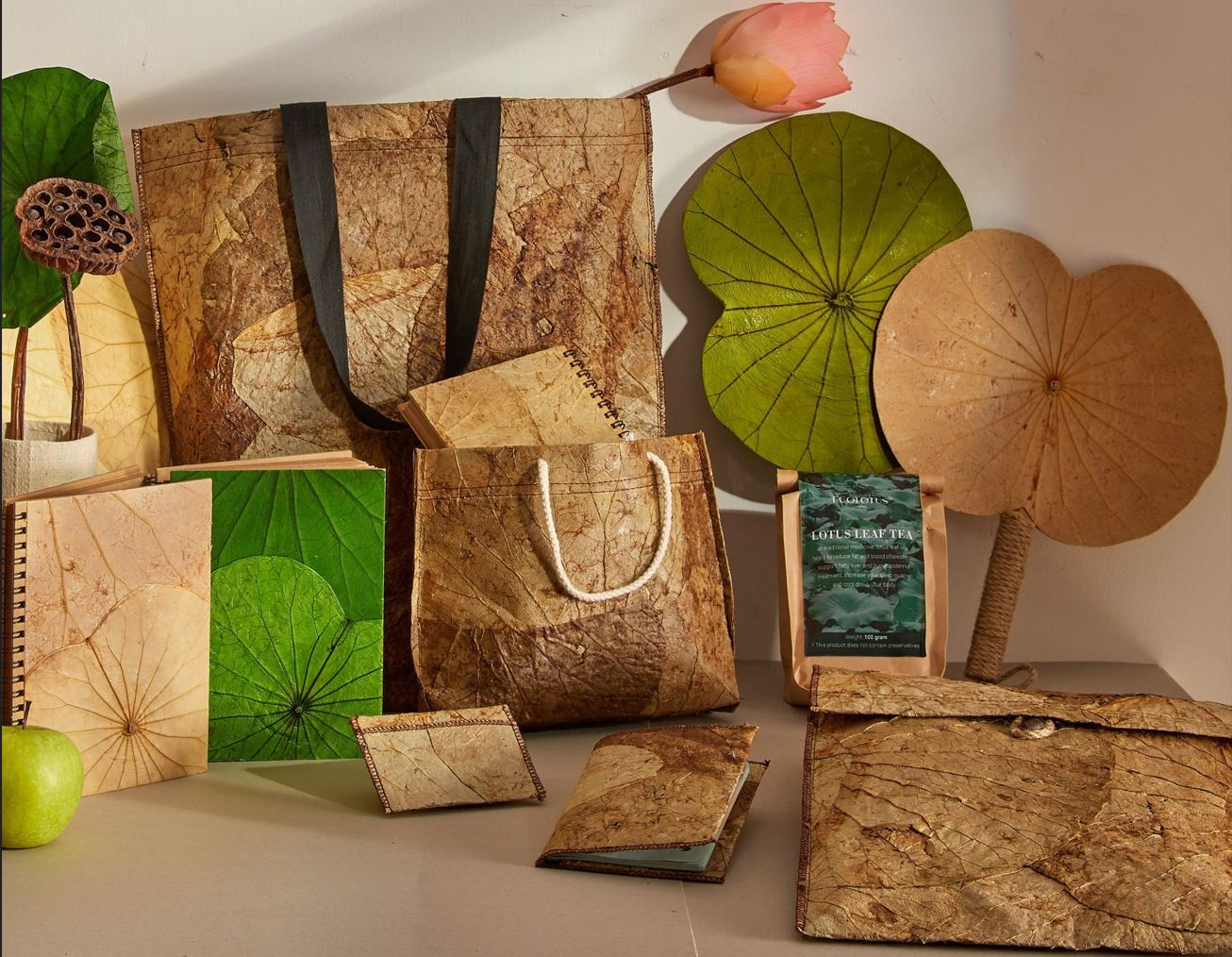
Building on the idea of utilizing this natural resource, Ecolotus Vietnam Company Limited has experimented with incorporating lotus leaves into handicraft and packaging products. Ecolotus pursues a circular approach to the lotus value chain, aiming to maximize the potential of every part of the plant. The company combines lotus-derived materials with other environmentally friendly materials to create a diverse range of products, including “immortal” lotus flowers preserved through drying technology, lotus leaf handbags, lotus flower tea, lotus leaf tea, lotus leaf conical hats, canvas paintings, and more. Each product serves a different purpose in everyday life.
In particular, lotus leaf paper combines dried lotus leaves with Kraft paper, helping protect the environment while enhancing the material's strength and durability. The paper can be designed in various sizes to meet customer requirements. It has become a new natural material for other creative industries, including fashion, interior design, gifts, and packaging.
The lifespan of each of Ecolotus's environmentally friendly products varies depending on how carefully consumers handle and maintain them. Ecolotus's aim is to extend the lifespan of flowers rather than turn them into plastic. While plasticizing flowers may make products last over time, it also makes them difficult to decompose and can cause adverse environmental impacts.
Beyond their environmental and design significance, developing products from lotus leaves also helps expand the lotus value chain within the agricultural economy. When more parts of the plant are utilized for different purposes, the overall economic value of the lotus can increase, creating additional opportunities for production activities and product innovation while diversifying market outlets for lotus-growing regions.
Currently, Ecolotus's lotus-based handicraft products, including handbags, conical hats, and notebooks, are exported to markets such as Japan, Germany, Sweden, and France. Each year, the company receives orders from Lotte Group for 50,000 units.
Method & scope
The content is compiled and reproduced in full from a published news source. This article is published for informational purposes only and does not involve independent research or the analysis of original data.
References
- Giải pháp bao bì xanh bền vững từ lá sen ↗ (accessed 2026 - 10 - 07)