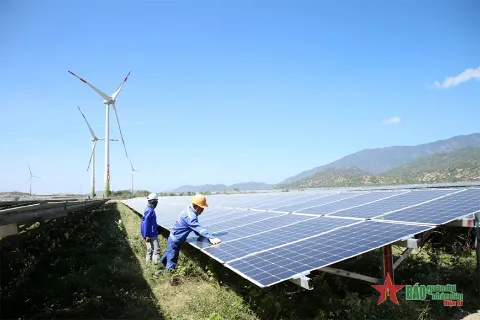
As the global energy transition gathers pace, Vietnam has identified renewable energy as one of the key pillars for achieving its green growth goals. Located in the South Central Coast region and characterised by harsh natural conditions, abundant sunshine and strong winds, Ninh Thuan (now part of Khanh Hoa Province) was once among the localities facing considerable challenges in socio-economic development. However, these distinctive climatic conditions have become a significant advantage, enabling the province to make a breakthrough and emerge as one of the country’s leading hubs for solar and wind power development.
According to the study “Sustainable Employment Associated with Renewable Energy Development: A Case Study of Ninh Thuan Province”, conducted by Dr. Tran Thi Tuyet and colleagues at the Institute of Human Geography, the rapid development of renewable energy projects in recent years has brought about significant changes in the local labour structure. Previously reliant primarily on low-productivity agriculture and characterised by unstable incomes, many workers have gained opportunities to transition into new occupations associated with industry and services.
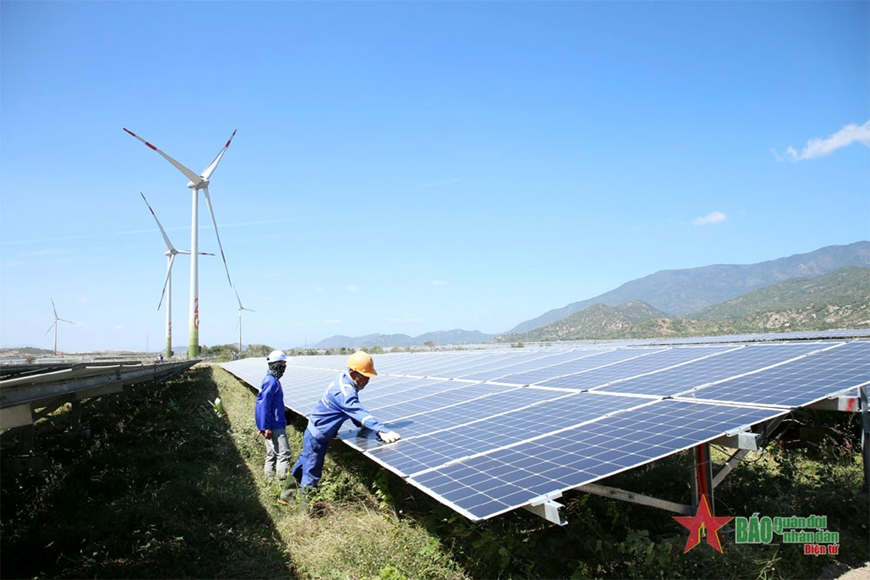
Solar and wind power projects have not only generated thousands of jobs during the construction phase but also sustained a stable workforce once the facilities become operational. During construction, strong demand for both general and technical workers has helped create employment opportunities for local residents, particularly those in rural areas. Once the plants begin operating, positions such as technicians, operations staff and maintenance personnel continue to be available, offering higher incomes than traditional occupations and thereby helping improve local living standards.
Furthermore, renewable energy development has generated significant spillover effects across other economic sectors. Services such as transport, accommodation, food and beverage, and trade have expanded alongside these projects, creating a diverse employment ecosystem. Some areas that were previously predominantly agricultural have gradually transformed, with new economic activities emerging to serve the needs of workers and experts employed by energy projects. This has not only stimulated local economic growth but also contributed to modernising the rural landscape.
However, the study also points out several limitations affecting renewable energy-related employment in Ninh Thuan. Most jobs during the construction phase are seasonal and do not guarantee long-term stability. Once projects are completed, some local workers risk returning to unemployment or underemployment if they do not receive appropriate training and support to transition into other occupations. In addition, the technical qualifications required for operational positions remain a major barrier, prompting many businesses to recruit workers from elsewhere while the local workforce is unable to meet these requirements.
The rapid expansion of renewable energy projects also poses challenges in terms of planning, land use and technical infrastructure. Without appropriate development orientations, uncontrolled expansion could lead to environmental and social consequences, undermining the locality’s long-term sustainability.
Based on the research findings, the research team emphasises that coordinated, long-term policies are needed to maximise the benefits of renewable energy in generating sustainable employment. Among these, local workforce training plays a pivotal role in helping workers enhance their skills and adapt to the requirements of the changing labour market. At the same time, stronger links between businesses, training institutions and local authorities are needed to build a sustainable employment ecosystem associated with the development of supporting industries and related services.
In addition, renewable energy development planning must be closely integrated with socio-economic development plans to ensure a balance between growth objectives, environmental protection and social welfare. Prioritising local labour, developing local value chains and supporting the livelihoods of residents affected by energy projects are also important factors that require attention.
Ninh Thuan’s experience clearly demonstrates the potential for combining clean energy development with sustainable job creation. Beyond contributing to emissions reduction targets, renewable energy offers a new pathway for local economic development and improved quality of life. The findings of the study by Dr. Tran Thi Tuyet and colleagues are therefore relevant not only to Ninh Thuan but also provide an important reference for other localities pursuing the energy transition and sustainable development.
The experience in Ninh Thuan shows that renewable energy development is not merely a solution to the challenge of reducing emissions; it also creates new momentum for economic growth underpinned by sustainable employment. The establishment and expansion of clean energy projects have helped diversify livelihoods, increase incomes and improve the quality of life of local residents. The research findings of the Institute of Human Geography not only highlight the effectiveness of this model in Ninh Thuan but also provide important practical evidence that other localities can draw on when formulating policies and implementing a sustainable energy transition.
References
- Việc làm bền vững từ năng lượng tái tạo: Động lực kép cho tăng trưởng xanh ↗ (accessed 2026 - 07 - 01)