When Green Packaging Does Not Necessarily Mean Environmental Responsibility
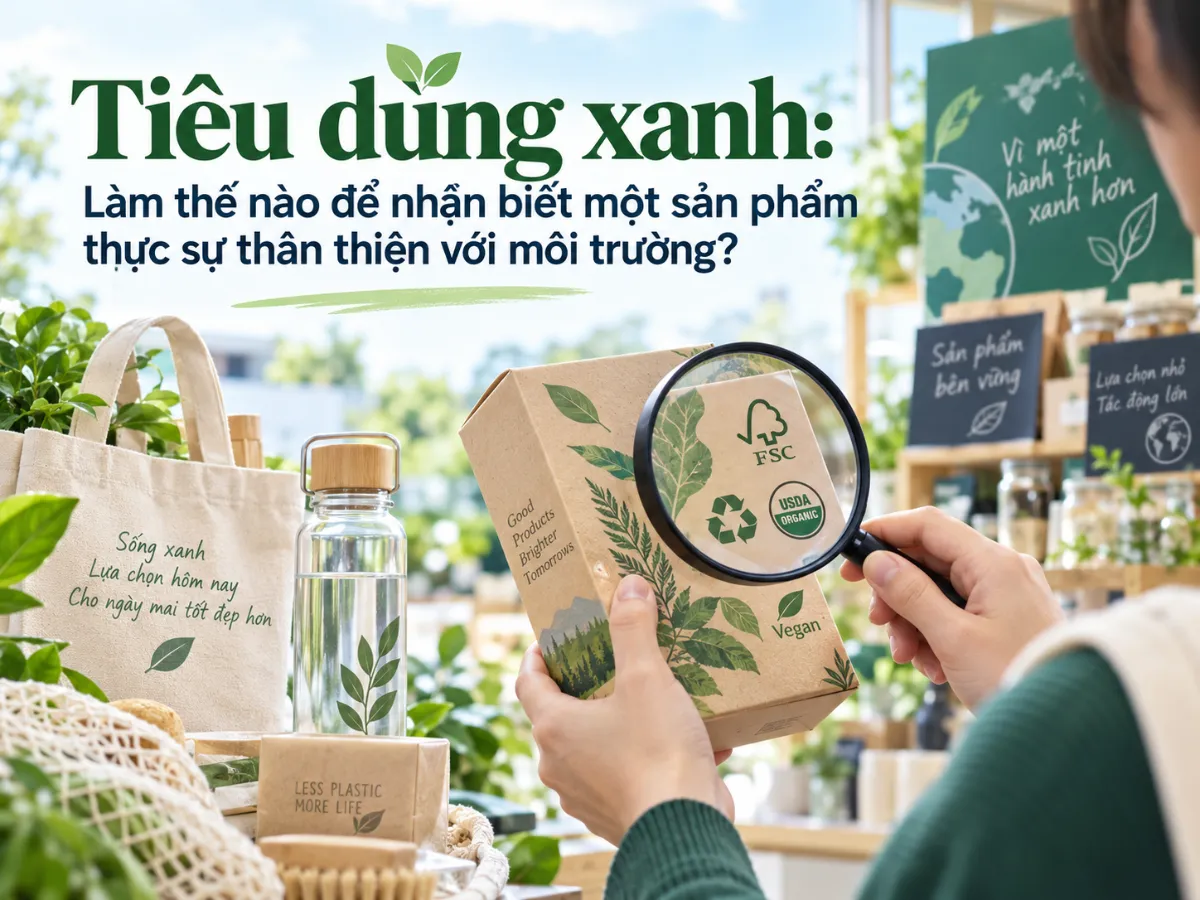
Walk into almost any supermarket today, and it is easy to find products featuring green packaging, images of trees and leaves, or claims such as “eco-friendly,” “natural,” and “100% environmentally friendly.”
These messages reflect a broader market shift, as environmental considerations become increasingly important in product development, corporate communications, and consumer purchasing decisions.
However, an important question remains: Does a product marketed as environmentally friendly necessarily have a lower environmental impact?
The answer is not always straightforward.
A paper bag, for example, may be presented as an alternative to a plastic bag, yet paper production still requires raw materials, water, and energy. A bottle made from recycled plastic may reduce demand for virgin plastic, but it can still become waste if it is not properly collected and managed after use.
Similarly, a product made from natural ingredients may still have a substantial environmental footprint if its production consumes significant resources or generates waste that is not adequately treated.
These examples demonstrate why environmental performance cannot be determined solely by a product's appearance or a single positive attribute.
According to the United Nations Environment Programme (UNEP), credible product sustainability information should follow fundamental principles, including reliability, relevance, clarity, transparency, and accessibility. Environmental information should also consider the product's life cycle rather than focusing exclusively on selected characteristics that support promotional messages.
This becomes particularly important in the context of greenwashing, a practice that has attracted growing attention in discussions about sustainable consumption and responsible business conduct.
Greenwashing occurs when environmental claims are exaggerated, misleading, insufficiently substantiated, or presented in ways that create an inaccurate impression of a product's or company's environmental performance.
Importantly, greenwashing does not always involve completely false information.
In some cases, a business may communicate a technically accurate statement while presenting it in a way that leads consumers to draw a much broader conclusion.
For instance, a product containing 30% recycled material in its packaging may be prominently advertised as a “green product,” even though no evidence has been provided regarding its other environmental impacts.
The recycled-content claim itself may be correct, but extending that claim to the environmental performance of the entire product requires further evidence.
Sustainable consumption therefore begins with the ability to distinguish marketing messages, technical information, and independently verifiable evidence.
Drawing on consumer guidance shared by the Center for Industrial and Supporting Industries Development (CISID) in Ho Chi Minh City, four practical criteria can help consumers make more environmentally responsible choices.
1. Environmental Certifications: Look Beyond the Logo and Understand What It Actually Verifies
Environmental certifications and ecolabels are important tools for helping consumers access more credible information about the environmental characteristics of products.
However, not every symbol appearing on packaging represents an official certification.
A green leaf, an image of the Earth, or the phrase “eco-friendly” may simply be a graphic element developed by the manufacturer. By contrast, recognized certification schemes generally operate according to defined criteria, assessment procedures, and verification requirements.
Understanding the Difference Between Environmental Claims and Certifications
The International Organization for Standardization (ISO) distinguishes between self-declared environmental claims and ecolabels issued through established certification programmes.
ISO 14021:2026, which addresses self-declared environmental claims, establishes principles and requirements for communicating environmental information and provides guidance on the documentation and methods needed to substantiate such claims.
Meanwhile, ISO 14024:2026 establishes principles and requirements for ecolabelling programmes, including the development of environmental criteria and procedures for assessing and certifying products.
This distinction does not mean that every environmental claim made directly by a business is unreliable.
A clear, specific, measurable claim supported by appropriate evidence can still provide useful information.
The key issue is whether the claim can be substantiated and whether its scope is communicated accurately.
Common Environmental Labels and What They Mean
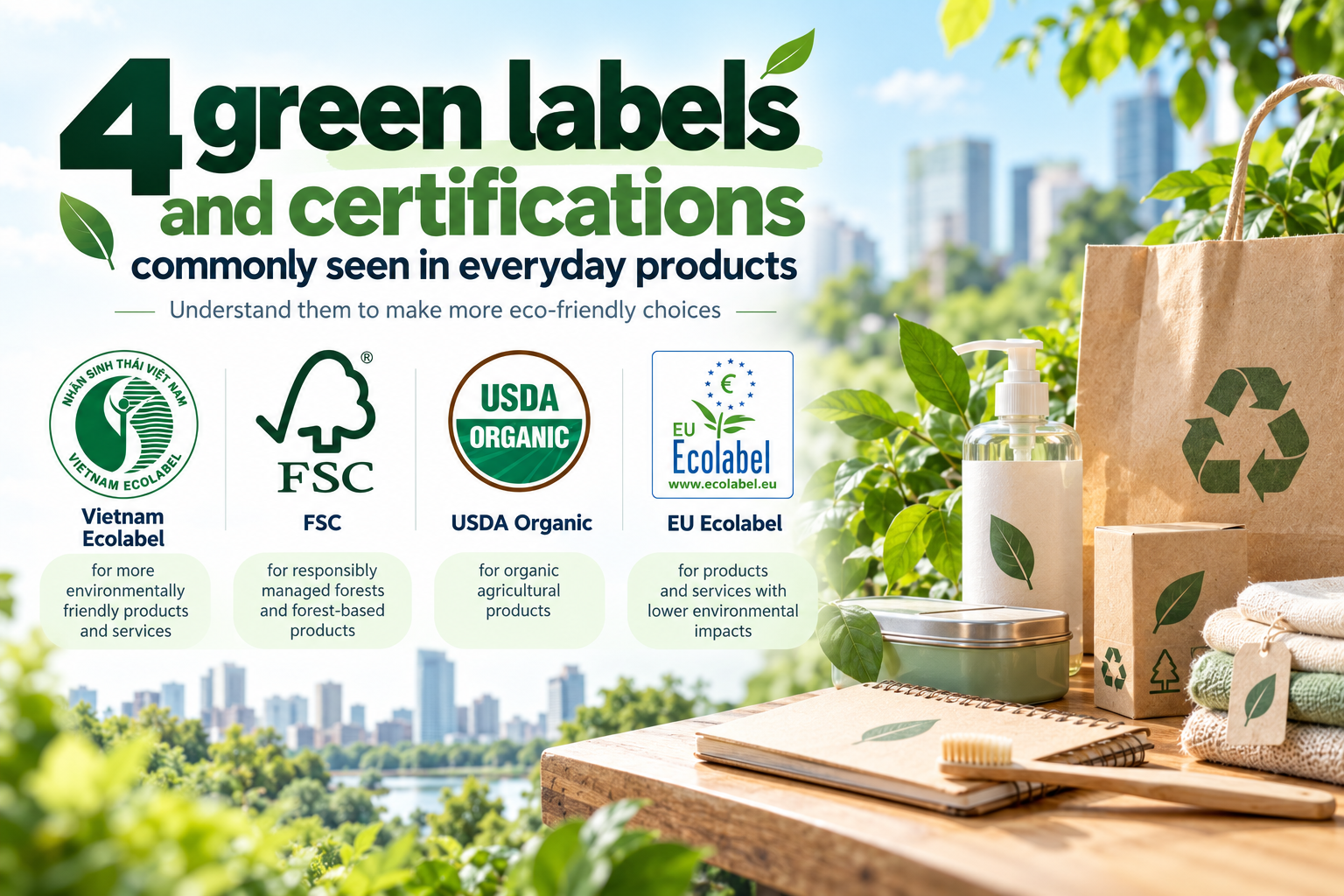
Vietnam Ecolabel
Vietnam Ecolabel is the country's official environmental labelling scheme for products and services that meet applicable environmental criteria.
Under Article 145 of Vietnam's Law on Environmental Protection 2020, the recognition of environmentally friendly products and services involves considerations related to raw materials, production technologies, resource use, and environmental impacts across relevant stages of their life cycle.
The label therefore has a different meaning from environmental imagery or promotional statements created independently by manufacturers.
FSC – Forest Stewardship Council
FSC certification is associated with responsible forest management and the traceability of forest-based materials throughout relevant supply chains.
FSC labels commonly appear on paper, books, cardboard packaging, wooden furniture, and other forest-based products.
The three main product labels communicate different sourcing characteristics:
FSC 100%: The forest-based materials come from FSC-certified forests.
FSC Mix: The product contains a combination of FSC-certified materials, recycled materials, and/or FSC-controlled wood.
FSC Recycled: The forest-based materials are sourced entirely from recycled materials, according to the certification scheme's requirements.
However, an FSC label does not certify that every stage of manufacturing, transportation, or product use is free from environmental impacts.
USDA Organic
USDA Organic is a certification system administered under the United States Department of Agriculture's organic regulations.
It verifies that applicable agricultural products meet specified requirements concerning production practices, permitted inputs, and compliance procedures.
However, organic certification should not automatically be interpreted as proof that a product has low carbon emissions or no adverse environmental impact.
Organic agriculture and climate-related environmental performance are related considerations, but they are not identical.
EU Ecolabel
The EU Ecolabel is the European Union's voluntary ecolabelling scheme for products and services that meet defined environmental criteria.
Its criteria are developed for specific product groups and consider significant environmental impacts across relevant stages of a product's life cycle.
Compared with a claim focusing on a single characteristic, such as recycled content, a multi-criteria ecolabel offers a broader assessment of environmental performance.
Nevertheless, certification does not imply that a product has absolutely no environmental impact.
What Should Consumers Check?
When encountering an environmental certification, consumers should consider who issued it, which standard applies, whether the certificate can be verified, and which aspects of the product are covered.
For example, FSC certification for paper packaging does not necessarily mean that the contents of the package are also FSC-certified.
Likewise, a certification covering one ingredient or material should not automatically be extended to the entire finished product.
The value of a certification lies not in how familiar its logo appears, but in what has actually been assessed and verified. This principle is equally important for businesses.
Rather than making broad claims such as “100% green,” companies should communicate specific environmental improvements, clearly define the scope of their claims, and provide supporting evidence.
2. Sustainable Packaging: Recyclable Does Not Always Mean Recycled
Packaging is among the most visible aspects of green consumption. It is also an area where environmental terminology is frequently misunderstood.
Terms such as recycled plastic, bioplastics, biodegradable packaging, and compostable materials have become increasingly common.
However, these terms describe different material characteristics and waste-management pathways.
A product containing recycled plastic is not necessarily recyclable after use. Similarly, packaging that is technically recyclable may never actually enter a recycling process.
The Difference Between Recycled Content and Actual Recycling
For example, rPET (recycled polyethylene terephthalate) refers to PET plastic that has undergone a recycling process.
PCR (post-consumer recycled) material refers to material recovered from waste generated after consumer use.
Using recycled materials can reduce demand for virgin raw materials and help keep resources circulating within the economy.
However, whether packaging can be recycled again depends on several factors, including its material composition, design, contamination levels, collection systems, recycling technologies, and market demand for recovered materials.
A plastic bottle may be technically recyclable, but if it is discarded with mixed household waste and never reaches a suitable recycling facility, that potential may not be realized.
This illustrates an important distinction between the technical recyclability of packaging and recycling that actually takes place.
Consumers should therefore avoid assuming that a recycling symbol guarantees a product will be recycled after disposal.
Why “Biodegradable” and “Compostable” Are Not Interchangeable
Another common misconception is that all packaging labelled “biodegradable” or “self-degrading” will safely disappear in the natural environment.
The United States Environmental Protection Agency (EPA) distinguishes biodegradable materials from compostable materials.
Compostable plastics are generally designed to break down under specified composting conditions. Depending on the material and applicable standard, these conditions may require controlled temperatures, moisture levels, microbial activity, and processing periods.
Some compostable packaging is intended specifically for industrial composting facilities rather than home composting or disposal in natural environments.
Furthermore, plastic that merely fragments into smaller pieces should not be considered fully biodegraded.
If breakdown is incomplete, smaller plastic particles may remain in the environment and contribute to pollution.
For this reason, claims such as “fully biodegradable” or “100% compostable” should be supported by information about the applicable standards, required processing conditions, and verification methods.
Reducing Packaging Can Be More Important Than Replacing It
From a circular economy perspective, switching from one packaging material to another is only part of the solution.
A more fundamental question is whether the packaging is necessary in the first place.
Could it be reduced, redesigned, reused, or eliminated without compromising product quality and safety?
For example, consumers who regularly purchase liquid hand soap may choose refill products rather than purchasing a new bottle each time.
However, the environmental benefits of refill systems depend on factors such as the amount and type of packaging used, the number of reuse cycles, and the availability of appropriate waste-management systems.
Similarly, reusable shopping bags can reduce reliance on single-use bags when they are used repeatedly.
But constantly purchasing new reusable bags simply because of their designs or marketing campaigns may undermine the intended environmental benefits.
The objective should not be to accumulate more products marketed as environmentally friendly.
Instead, it should be to avoid unnecessary resource consumption and extend the useful life of products and materials already in circulation.
3. Choosing Local Products: Environmental Benefits Go Beyond Transport Distance
Locally produced goods have become an important consideration in sustainable consumption, particularly for agricultural products, food, handicrafts, and regionally distinctive goods.
Supporting local producers can create economic and social benefits, including employment opportunities, stronger local supply chains, improved livelihoods, and greater value creation within communities.
In certain circumstances, shorter supply chains may also reduce transportation requirements, distribution costs, and the number of intermediaries involved in delivering products to consumers.
However, it would be misleading to conclude that locally produced goods are always associated with lower environmental impacts.
Transportation Is Only One Part of a Product's Carbon Footprint
According to analyses presented by Our World in Data, food transportation accounts for approximately 5% to 6% of global food-system greenhouse gas emissions in the studies discussed.
A much larger share of emissions is associated with other stages, including agricultural production and land-use change.
This means that how food is produced may have a greater influence on its carbon footprint than how far it travels.
For example, vegetables grown near a city in energy-intensive heated greenhouses may, under certain circumstances, generate more emissions than similar vegetables grown outdoors in a more suitable climate and transported efficiently over longer distances.
Similarly, locally produced food that experiences substantial losses during storage or distribution may have a different environmental profile from products managed through more efficient logistics systems.
Consequently, consumers should consider several factors when evaluating food products, including production methods, seasonality, preservation requirements, packaging, food loss, and actual consumption needs.
Choosing local products remains valuable, particularly because of their contributions to local economic development.
Nevertheless, the environmental advantages of local sourcing should be assessed in the context of the wider supply chain rather than assumed solely from geographical proximity.
Does OCOP Certification Mean a Product Is Environmentally Friendly?
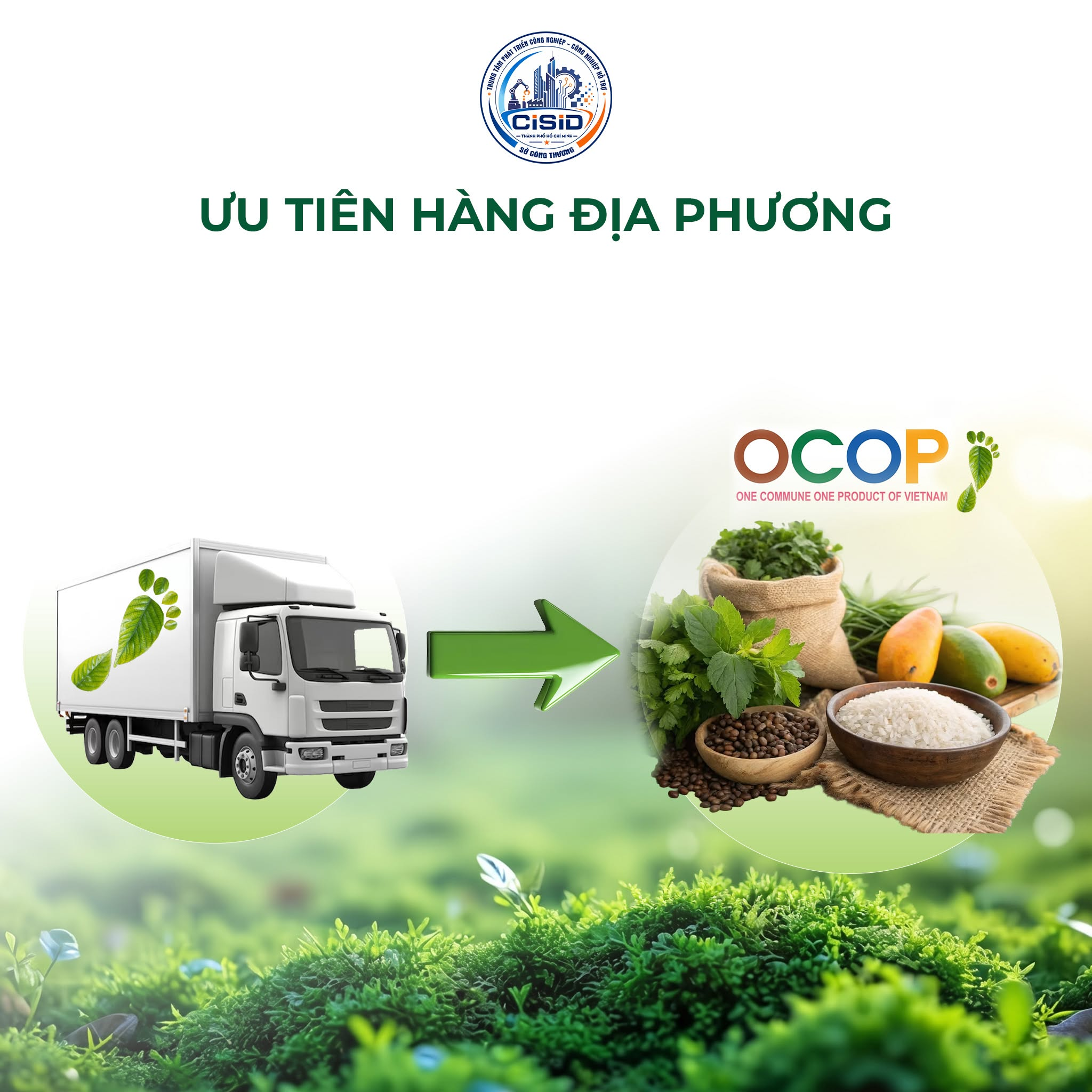
In Vietnam, the One Commune One Product (OCOP) Programme plays an important role in promoting locally distinctive products, improving their commercial value, and supporting rural economic development.
Under Prime Minister's Decision No. 148/QD-TTg dated February 24, 2023, the OCOP product evaluation and classification framework covers several groups of criteria, including product characteristics, community strengths, marketing capacity, and product quality.
Relevant criteria also address aspects of production organization and environmental protection.
The framework was subsequently amended and supplemented by Decision No. 1489/QD-TTg dated July 6, 2025.
However, an OCOP rating of three, four, or five stars does not automatically constitute certification that a product has a low carbon footprint or meets the criteria of an environmental ecolabel.
These assessment systems serve different purposes.
Consumers may choose OCOP products to support local producers and regional economic development while also examining additional information about ingredients, materials, packaging, production technologies, and environmental practices.
For businesses and cooperatives, sustainable local product development should extend beyond achieving higher OCOP ratings.
Measures such as improving water efficiency, reducing raw-material losses, saving energy, and managing waste responsibly can contribute more directly to reducing environmental impacts over time.
4. Traceability and Transparency: The Foundation of Responsible Consumption
One of the greatest challenges facing green consumption is the information gap between producers and consumers.
Consumers can examine a product's appearance, packaging, price, and certain quality characteristics.
However, they rarely have direct access to the processes through which raw materials are sourced, goods are manufactured, or waste is managed.
Greater transparency and product traceability can help narrow this gap.
Today, many products use QR codes to provide information about manufacturers, ingredients, production locations, certifications, and distribution channels.
Yet the presence of a QR code does not automatically mean that a product has been independently verified or meets environmental standards.
A QR code may simply direct consumers to a promotional webpage managed by the manufacturer.
The value of traceability depends on the accuracy, completeness, relevance, and verifiability of the information provided.
Consumers should therefore look beyond the act of scanning a code and consider what information is actually available.
Useful traceability information should help answer practical questions: Who manufactured the product? Where did the materials come from? Which certifications or quality declarations apply? Is the information current and relevant to the exact product being sold?
Vietnam's “Tick Xanh Trách Nhiệm” Programme: An Example of Supply Chain Accountability
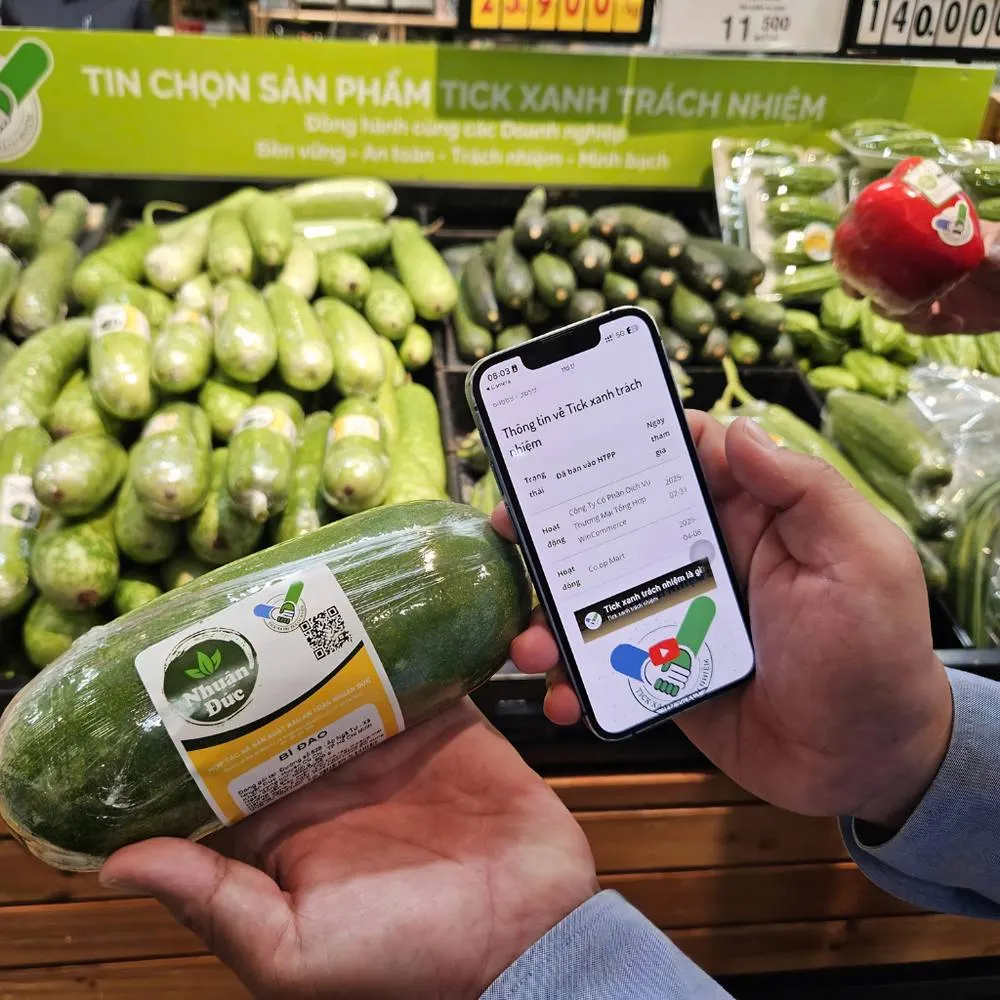
In Ho Chi Minh City, the “Tick Xanh Trách Nhiệm” (Responsible Green Tick) Programme has been introduced to strengthen accountability among businesses involved in producing, supplying, and distributing goods, particularly food products.
The programme brings together relevant authorities, producers, suppliers, and retailers to improve product information transparency, strengthen quality control, and enhance coordination when non-compliance is identified.
According to information published on the Vietnamese Government's official portal in July 2026, the programme had attracted 12 major retail groups by June 2026.
It had also established a participating network of more than 450 producers, with 5,594 products meeting the programme's criteria.
These figures demonstrate efforts to expand mechanisms for supply chain transparency, food safety assurance, and business accountability.
However, an important distinction must be maintained.
The Responsible Green Tick Programme primarily focuses on product quality, food safety, traceability, and supply chain accountability.
It is not equivalent to an ecolabel certifying the overall environmental performance of a product.
This distinction matters because product safety, traceable origins, and environmental sustainability are interconnected but separate concepts.
A product can be safe for consumption without necessarily having a low environmental impact.
Similarly, a product can have clear traceability information while still requiring improvements in resource efficiency or waste management.
For businesses, transparency should not be viewed merely as a regulatory or administrative requirement.
Communicating credible information about sourcing, production, product quality, and environmental commitments can also strengthen consumer trust and support more responsible relationships with suppliers, distributors, and business partners.
This approach is consistent with the principles of ESG (Environmental, Social and Governance), which encourage businesses to consider environmental impacts, social responsibilities, and governance practices as interconnected dimensions of responsible business management.
Why Environmental Performance Must Be Evaluated Across a Product's Life Cycle
The four criteria outlined above provide practical guidance for consumers. However, a more comprehensive understanding of environmental sustainability requires consideration of a product's entire life cycle. This approach is commonly known as Life Cycle Assessment (LCA).
LCA is a methodology used to evaluate environmental impacts associated with a product or service across defined stages of its life cycle.
Depending on the assessment boundaries, these stages may include raw-material extraction, manufacturing, transportation, distribution, use, and end-of-life treatment.
International standards such as ISO 14040 provide principles and a framework for conducting life cycle assessments.
For example, comparing two packaging alternatives solely on the amount of plastic used may not reveal their overall environmental differences.
Lightweight packaging may require fewer materials and reduce transportation-related emissions.
However, if it consists of multiple layers that are difficult to separate, recycling may become more challenging.
Conversely, packaging that requires more material during production may perform differently if it can be reused repeatedly within an effective return and recovery system.
Life cycle assessment helps examine these trade-offs more systematically.
It also reduces the risk of addressing an environmental problem at one stage of a product's life while unintentionally increasing impacts elsewhere.
Nevertheless, it is not appropriate to declare one alternative universally superior without defining the assessment boundaries, functional requirements, relevant assumptions, and supporting data.
This leads to an important principle: Sustainability should not be treated as an absolute distinction between “green” and “not green.” Environmental performance should be assessed through specific, evidence-based, and comparable impacts.
A product may substantially reduce raw-material consumption while still presenting challenges in waste management. A company may make measurable progress in reducing greenhouse gas emissions while continuing to face environmental risks in its supply chain.
Communicating both achievements and limitations can make sustainability efforts more credible than relying on absolute claims that cannot be adequately substantiated.
From Consumer Choices to Corporate Responsibility
Green consumption is often promoted through individual actions, such as carrying reusable shopping bags, avoiding unnecessary single-use plastics, choosing certified products, or supporting local businesses.
These actions are meaningful, but lasting change will be difficult if responsibility is placed entirely on consumers.
In reality, not every consumer has the time, technical knowledge, or financial resources to investigate the environmental performance of every product. Consumers are also rarely in a position to independently verify complex information about carbon emissions, raw-material sourcing, industrial processes, or recycling technologies.
For this reason, businesses have a responsibility to provide information that is accurate, understandable, relevant, and supported by appropriate evidence.
For manufacturers and retailers, environmental sustainability should be integrated into product development and operational strategies rather than treated solely as a marketing activity.
A commitment to reducing packaging should be reflected in actual packaging design and material consumption. A claim about recycled content should specify the proportion involved and the components to which it applies. A statement about emissions reductions should identify the measurement methodology, comparison period, and relevant scope.
Retailers also play an important role by establishing supplier requirements, requesting supporting documentation, and avoiding promotional statements that may mislead consumers.
At the wider market level, certification schemes, product-quality controls, traceability programmes, and consumer-protection mechanisms can help establish a more transparent and competitive business environment.
Such mechanisms are particularly important for companies that make genuine investments in environmental improvements.
When environmental information is unclear or misleading, responsible businesses may find themselves competing against products that benefit from green marketing messages without making comparable operational improvements.
Conversely, markets that reward credible evidence, transparency, and accountability can encourage companies to invest in cleaner technologies, resource-efficient designs, improved supply chains, and stronger governance practices.
Sustainable Consumption Begins with Asking the Right Questions
Not every purchasing decision requires a technical environmental report or a comprehensive life cycle assessment.
For everyday consumers, a useful starting point is to ask four questions.
First, is there credible evidence supporting the product's environmental claims?
Consumers should examine the meaning and scope of certifications rather than relying solely on environmental symbols or marketing statements.
Second, has the packaging been designed to minimize waste?
Reducing unnecessary packaging, choosing reusable options, and considering locally available recycling systems are often more meaningful than simply replacing one material with another.
Third, are the product's origins and production processes taken into account?
Supporting local products can be valuable, but transportation distance alone should not be treated as a complete measure of environmental performance.
Fourth, does the business provide transparent and verifiable information?
Specific claims supported by relevant data are more useful than vague promises about being “green,” “clean,” or “good for the planet.”
Beyond these four questions, consumers can consider something even more fundamental before making a purchase: Do I actually need this product, or can I continue using, repairing, or repurposing something I already own?
Even products designed to reduce environmental harm require materials, energy, and resources to manufacture.
Sustainable consumption is therefore not simply about replacing conventional products with those carrying environmental claims.
It is also about using resources more efficiently, extending product lifespans, and avoiding unnecessary consumption.
When Green Consumption Becomes a Driver of Market Transformation
The transition towards sustainable production and consumption cannot be achieved through environmental slogans alone.
Meaningful progress requires changes in how products are designed, materials are sourced, information is communicated, and responsibilities are fulfilled throughout value chains.
Consumers contribute by creating demand for products that demonstrate credible environmental performance.
Businesses contribute by improving production methods, strengthening product quality, reducing environmental impacts, and providing evidence to support their commitments.
Certification organizations, distributors, and public authorities help establish the standards and verification mechanisms necessary to build trust.
When these efforts reinforce one another, green consumption can move beyond a marketing trend and become part of a broader transition towards a circular economy and sustainable development.
A product does not become environmentally friendly simply because it is labelled “green.” Its real value lies in demonstrable environmental improvements, verifiable information, and the accountability of those responsible for bringing it to market.
For consumers, living more sustainably does not necessarily mean buying more green products.
It begins with understanding what we purchase, making better use of what we already have, and reducing avoidable environmental impacts through everyday choices.
References
- Center for Industrial and Supporting Industries Development (CISID) – Four Considerations When Choosing Environmentally Friendly Products, via the Kết nối Công Thương TP.HCM Facebook page ↗ (accessed 2026-10-28)
- United Nations Environment Programme (UNEP) – Guidelines for Providing Product Sustainability Information ↗ (accessed 2026-10-28)
- International Organization for Standardization (ISO) – ISO 14021:2026, Self-Declared Environmental Claims ↗ (accessed 2026-10-28)
- International Organization for Standardization (ISO) – ISO 14024:2026, Ecolabels ↗ (accessed 2026-10-28)
- International Organization for Standardization (ISO) – ISO 14040:2006, Environmental Management: Life Cycle Assessment ↗ (accessed 2026-10-28)
- National Assembly of Vietnam – Law on Environmental Protection No. 72/2020/QH14 ↗ (accessed 2026-10-28)
- Forest Stewardship Council (FSC) – What Do the FSC Labels Mean? ↗ (accessed 2026-10-28)
- United States Department of Agriculture (USDA) – Organic Certification and Organic Basics ↗ (accessed 2026-10-28)
- European Commission – EU Ecolabel: Frequently Asked Questions ↗ (accessed 2026-10-28)
- United States Environmental Protection Agency (EPA) – Frequently Asked Questions About Plastic Recycling and Composting ↗ (accessed 2026-10-28)
- Our World in Data – Most Carbon Emissions from Food Miles Are Produced by Trucks on the Road ↗ (accessed 2026-10-28)
- Prime Minister of Vietnam – Decision No. 148/QD-TTg on OCOP Product Evaluation and Classification Criteria ↗ (accessed 2026-10-28)
- Prime Minister of Vietnam – Decision No. 1489/QD-TTg Amending and Supplementing the OCOP Evaluation Framework ↗ (accessed 2026-10-28)
- Government Portal of Ho Chi Minh City – Strengthening Food Safety Measures and Expanding the Responsible Green Tick Programme ↗ (accessed 2026-10-28)