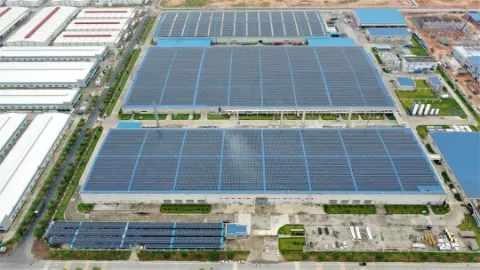

The agreements were coordinated by Macquarie’s Energy Markets and Customer Solutions division, marking a continuation of the clean energy partnership between Macquarie and Microsoft. Previously, the two companies had entered into agreements covering a total of 540 MW of wind and solar power capacity in the United Kingdom, Spain and India.
Expanding Cooperation in Renewable Energy Development
Commenting on the agreements, Raghuram Natarajan, CEO of Blueleaf Energy, said that the partnership with Microsoft goes beyond a commercial arrangement and reflects a shared commitment to a lower-carbon future.
He noted that by connecting energy markets in Japan and India, the two companies are promoting a collaborative model in which regional expertise and experience can help accelerate the development of new electricity supplies.
Ed Northam, Global Head of Green Investments at Macquarie Asset Management, also expressed the company’s enthusiasm for continuing its partnership with Microsoft. He said that clean energy solutions tailored to partners’ needs can support Microsoft’s business objectives while addressing growing global demand for affordable, lower-carbon electricity that can be brought online quickly.
Rising Electricity Demand Driven by AI and Digital Infrastructure
The new agreements were announced following Microsoft’s announcement of plans to invest USD 10 billion in Japan between 2026 and 2029. The investment comes amid rising electricity demand, partly driven by the expansion of computing capacity, artificial intelligence (AI) and digital infrastructure.
Entering into long-term power purchase agreements with renewable energy projects is one way for Microsoft to secure clean electricity to support its expanding business operations across multiple markets.
Through its collaboration with Blueleaf Energy and Macquarie, Microsoft is continuing to expand its renewable energy procurement agreements in Japan while building on clean energy partnerships already established in several other countries.
According to Sustainability 360° – Fly To Sky Center for Sustainability Research and Advisory (FTS CSRA):
The agreements between Microsoft and Blueleaf Energy highlight the increasingly important role of technology companies in accelerating the energy transition, particularly as electricity demand driven by artificial intelligence (AI), data centers, and digital infrastructure continues to grow rapidly. Through long-term Power Purchase Agreements (PPAs), Microsoft is not only seeking renewable electricity to support its business expansion but also helping create stable market demand for new electricity generation projects. Long-term purchase commitments can provide project developers with greater revenue predictability, reduce commercial risks, and improve their ability to secure financing and investment for construction. This represents an important model of cooperation in which corporate energy demand becomes a driver of renewable electricity development, rather than relying exclusively on government incentives or investment from energy producers.
From an environmental, social, and governance (ESG) perspective, the agreements reflect a broader trend of businesses proactively integrating climate objectives into procurement practices, energy management, and long-term corporate strategies. For companies operating large-scale data center infrastructure, such as Microsoft, electricity consumption is a significant environmental consideration, as emissions associated with the generation of purchased electricity are accounted for under Scope 2 of the GHG Protocol. Entering into PPAs with new solar projects can support strategies to address electricity-related emissions while contributing to additional renewable generation capacity. However, it is important to distinguish between renewable electricity procurement commitments, the accounting of electricity-related environmental attributes, and actual emissions reductions within the electricity system. The environmental effectiveness of such agreements depends on several factors, including installed capacity, electricity generation, project commissioning, the allocation of renewable energy certificates or other energy attributes, and local electricity system conditions. Therefore, signing a PPA does not, by itself, demonstrate that emissions reductions have already been achieved or that a company's entire electricity demand is being met with renewable energy.
More broadly, the collaboration between Microsoft, Blueleaf Energy, and Macquarie Asset Management raises an important consideration for sustainable development in the digital era: technological growth must be accompanied by responsible energy sourcing and effective management of environmental impacts. The rapid expansion of AI and computing infrastructure can generate substantial economic and social value, but it also places additional pressure on electricity demand, transmission infrastructure, and the capacity of energy systems. In this context, long-term PPAs can serve as a mechanism connecting corporate electricity consumers, project developers, and financial institutions, mobilizing resources to expand lower-emission energy solutions. This case illustrates that the green transition involves more than businesses choosing to purchase clean electricity. It also requires their active participation in developing markets, supporting new energy generation capacity, and aligning commercial decisions with long-term climate objectives. Although the actual impacts of the two projects in Japan will need to be assessed once they become operational, the agreements provide an example of how commercial partnerships can help advance the digital economy alongside the development of more sustainable energy systems.
Method & scope
This article has been compiled and edited using publicly available information, supplemented by objective analysis and assessments from a sustainable development perspective to clarify the context, significance, and potential implications of the developments. The analysis is intended for informational and reference purposes and does not constitute verification of outcomes or impacts that have not yet been substantiated by actual evidence.
References
- ESG Today I https://www.esgtoday.com/microsoft-signs-clean-energy-deals-in-japan-with-macquaries-blueleaf/ I 2026-11-03