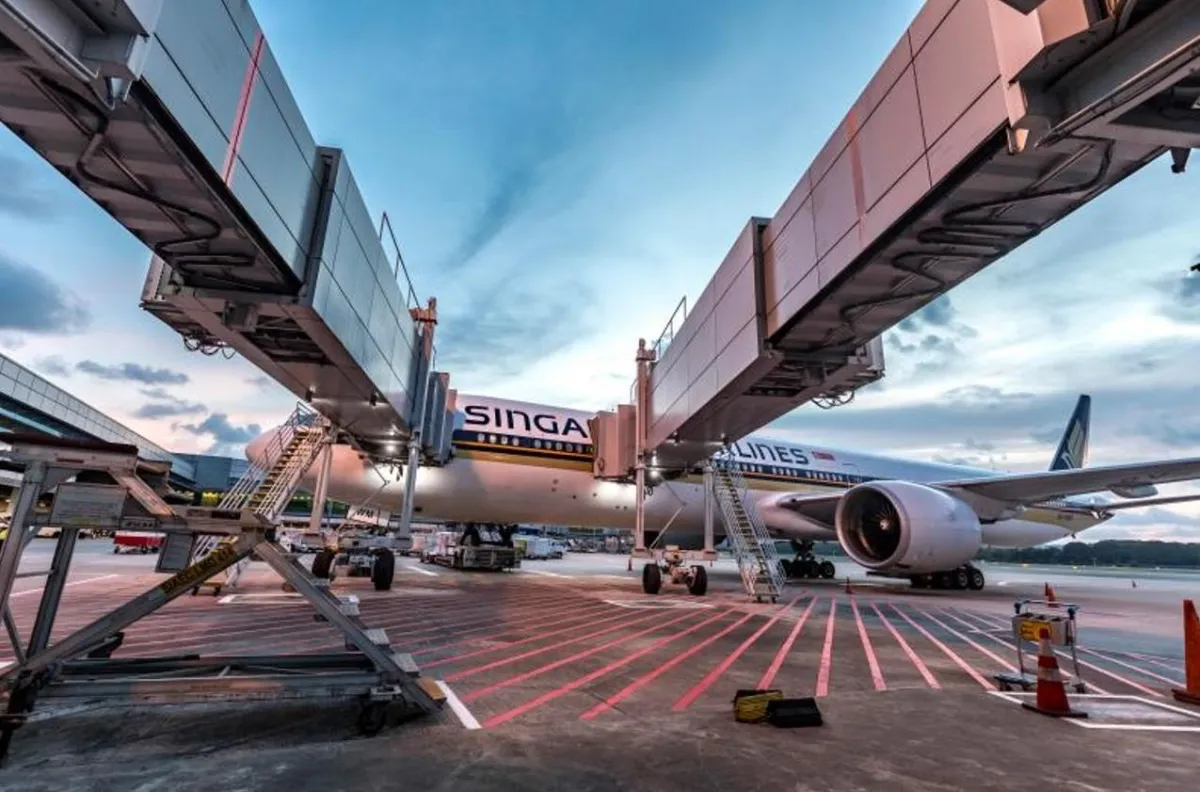
Under the agreement, Singapore Airlines will purchase up to 4,800 tonnes of SAF over a three-year period, with deliveries expected to begin in 2028. The partnership is intended to support the development of production capabilities for lower-carbon fuels.
Technology Converts Waste Carbon into Aviation Fuel
Founded in 2022 and headquartered in Singapore, Aether Fuels develops technology to produce sustainable liquid fuels for the aviation and maritime industries.
The company’s technology can convert various types of feedstock into compounds such as CO, CO₂, CH₄ or H₂ for fuel production. These feedstocks include captured CO₂, industrial waste gases, biogas, gasified municipal solid waste and waste biomass.
Under the new agreement, the SAF supplied to Singapore Airlines will be produced at Project Beacon, a planned commercial production facility by Aether Fuels at the refining complex operated by Aster on Pulau Bukom, Singapore.
The facility is expected to use biomethane and industrial waste gases to produce SAF. This represents an alternative to the HEFA (Hydroprocessed Esters and Fatty Acids) pathway, which relies on lipid-based feedstocks.
Purchase Agreement Supports SAF Commercialization
According to Conor Madigan, Co-Founder and CEO of Aether Fuels, when the two parties signed a memorandum of understanding (MOU) the previous year, Project Beacon had not yet been announced. Since then, the company has selected Singapore as the location for its first commercial production facility and established key partnerships across the local value chain.
He said the binding purchase agreement represents an important next step and sends a clear demand signal from a leading global airline. Such collaboration is also essential to creating the commercial conditions needed to scale up new SAF production technologies.
For Singapore Airlines, this makes it the first airline to commit to purchasing SAF produced at Project Beacon. The agreement also marks the airline’s first purchase of SAF made using new technology that converts waste carbon feedstocks into aviation fuel.
Lee Wen Fen, Chief Sustainability Officer of Singapore Airlines, said that supporting the development and adoption of SAF, while securing future supplies, is integral to the airline’s ambition to achieve net-zero carbon emissions by 2050.
As the first airline to purchase SAF from Project Beacon, Singapore Airlines is demonstrating demand for lower-carbon fuel production pathways in Singapore.
According to Sustainability 360° – Fly To Sky Center for Sustainability Research and Advisory (FTS CSRA)
The agreement between Singapore Airlines and Aether Fuels demonstrates that the green transition depends not only on research and technological innovation but also on the active participation of businesses in creating market demand and accelerating the adoption of sustainable solutions. By committing to purchase Sustainable Aviation Fuel (SAF) in the future, Singapore Airlines helps establish the commercial conditions needed for technologies that convert waste carbon-based feedstocks into aviation fuel to be deployed at a larger scale. In particular, a purchase commitment made before a production facility becomes operational can help technology developers strengthen project feasibility, attract investment, and gradually establish supply chains for lower-carbon aviation fuels.
From an environmental and circular economy perspective, the use of biomethane and industrial waste gases to produce aviation fuel represents an emerging approach to resource utilization, in which residual materials and waste streams can be converted into economically valuable products rather than simply treated or discarded. This approach can also help diversify SAF feedstocks, reduce dependence on established production pathways, and provide the aviation industry with additional options for pursuing its long-term climate objectives. However, the use of waste-derived feedstocks does not mean that the resulting fuel is entirely emissions-free. Actual greenhouse gas emissions reductions must be determined through lifecycle assessments that account for feedstock origins, energy consumption during production, transportation and fuel use, as well as verified operational performance once the project becomes commercially operational.
More broadly, the collaboration between Singapore Airlines and Aether Fuels highlights the interconnected roles of technological innovation, circular economy principles, supply chain management, and corporate sustainability strategies. It also illustrates how responsible procurement practices and long-term commercial commitments can contribute to accelerating the green transition. Rather than merely adopting environmentally preferable products or solutions already available in the market, businesses can actively help create markets for emerging technologies through investment partnerships, purchase commitments, and value chain development. Although the project's environmental benefits will need to be validated through actual performance data, the agreement demonstrates that sustainable development is not solely about reducing the negative impacts of existing operations. It also involves creating the conditions necessary for lower-emission production, business, and consumption models to emerge, develop, and expand in the future.
Method & scope
This article has been compiled and edited using publicly available information, supplemented by objective analysis and assessments from a sustainable development perspective to clarify the context, significance, and potential implications of the developments. The analysis is intended for informational and reference purposes and does not constitute verification of outcomes or impacts that have not yet been substantiated by actual evidence.
References
- ESG Today I https://www.esgtoday.com/singapore-airlines-signs-deal-to-purchase-saf-made-from-waste-carbon/ I 2026-11-03