I. INTRODUCTION
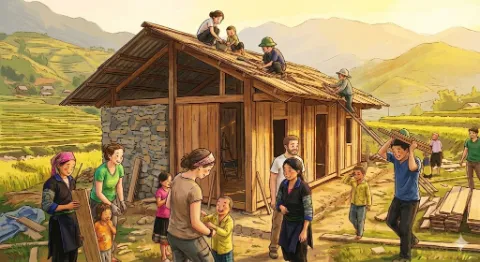
In recent years, voluntourism has gradually emerged as a new trend in Vietnam, particularly among young people, businesses, and social organizations. Unlike traditional charity trips, voluntourism combines travel and cultural experiences with activities that contribute to local communities. However, in reality, most voluntourism programs in Vietnam are not “large-scale” projects, but rather small, short-term activities that offer a high degree of flexibility. When properly organized, these programs can still create sustainable value.
This article provides an in-depth analysis of voluntourism in Vietnam from a practical perspective, with reference to models being implemented by various domestic and international organizations. It also incorporates the organizational experience of FLY TO SKY CHARITY AND COMMUNITY DEVELOPMENT SUPPORT SOCIAL ENTERPRISE COMPANY LIMITED – Fly To Sky Charity Organization, an entity with the capacity to implement professional and financially transparent voluntourism programs, ensure proper invoices and supporting documents, and legally mobilize community resources for implementation.
II. VOLUNTOURISM – CONCEPT AND CONTEXT IN VIETNAM
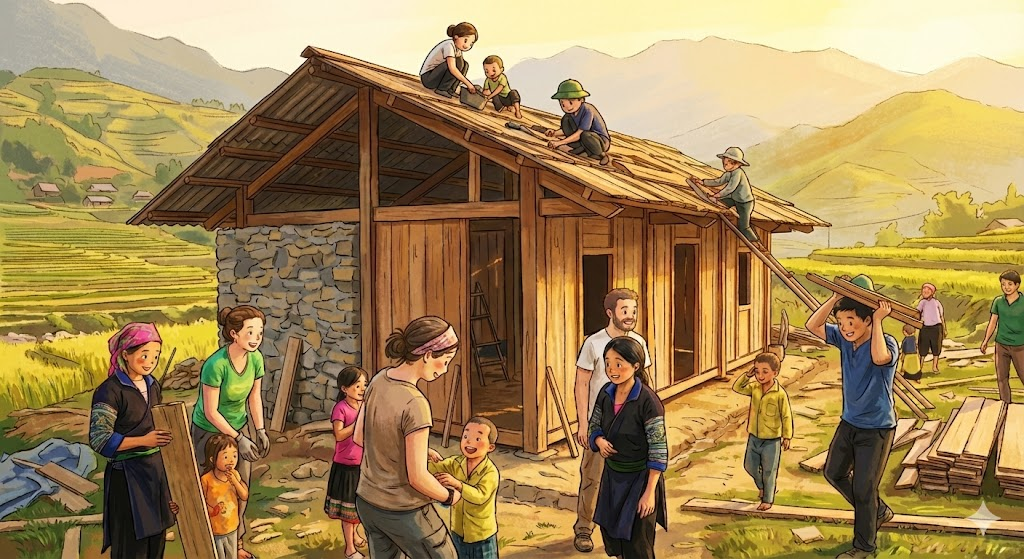
Voluntourism is a form of tourism in which participants both experience a destination and directly or indirectly engage in activities that serve the local community, such as education, environmental protection, community healthcare, improving living conditions, or supporting local livelihoods. Participation typically lasts for a short period, ranging from half a day or one day to several days or a week.
In Vietnam, voluntourism has developed alongside:
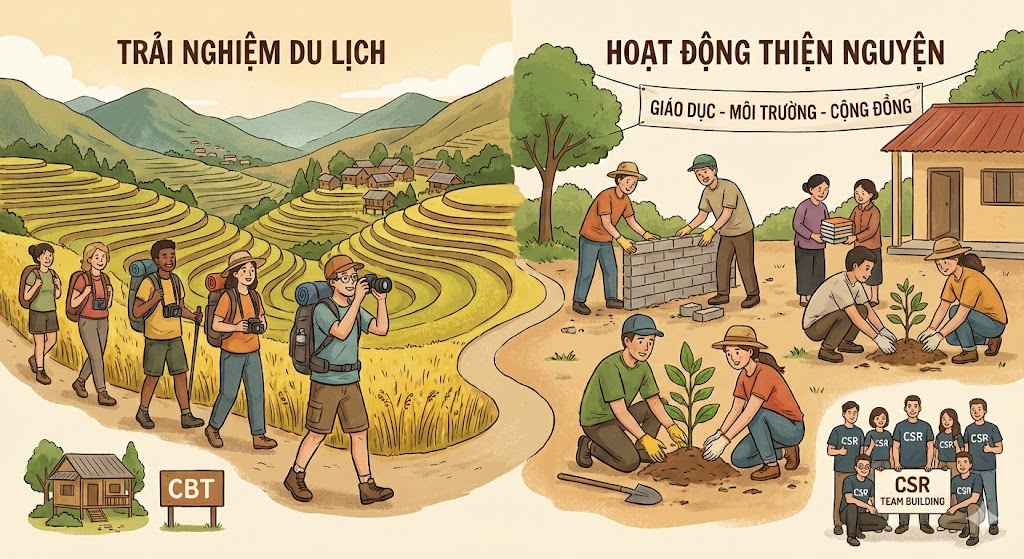
- The growing popularity of experiential tourism and community-based tourism (CBT).
- The increasing demand among businesses to organize CSR/ESG activities combined with tourism and team-building.
- The desire among young people to “travel – experience – contribute” rather than simply engage in conventional sightseeing.
III. IMPLEMENTATION IN PRACTICE: VOLUNTOURISM DOES NOT NECESSARILY HAVE TO BE A LARGE-SCALE PROJECT
Contrary to the common perception that voluntourism must involve building schools, constructing bridges, or implementing other large-scale infrastructure projects, many organizations today are implementing smaller models that are easier to organize and suitable for limited resources.
Some common types of small-scale projects include:
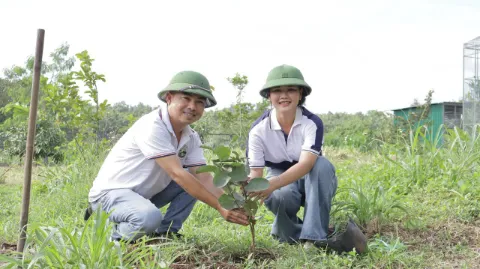
- Half-day to one-day programs: cleaning beaches, planting trees, organizing events for children, and donating school supplies.
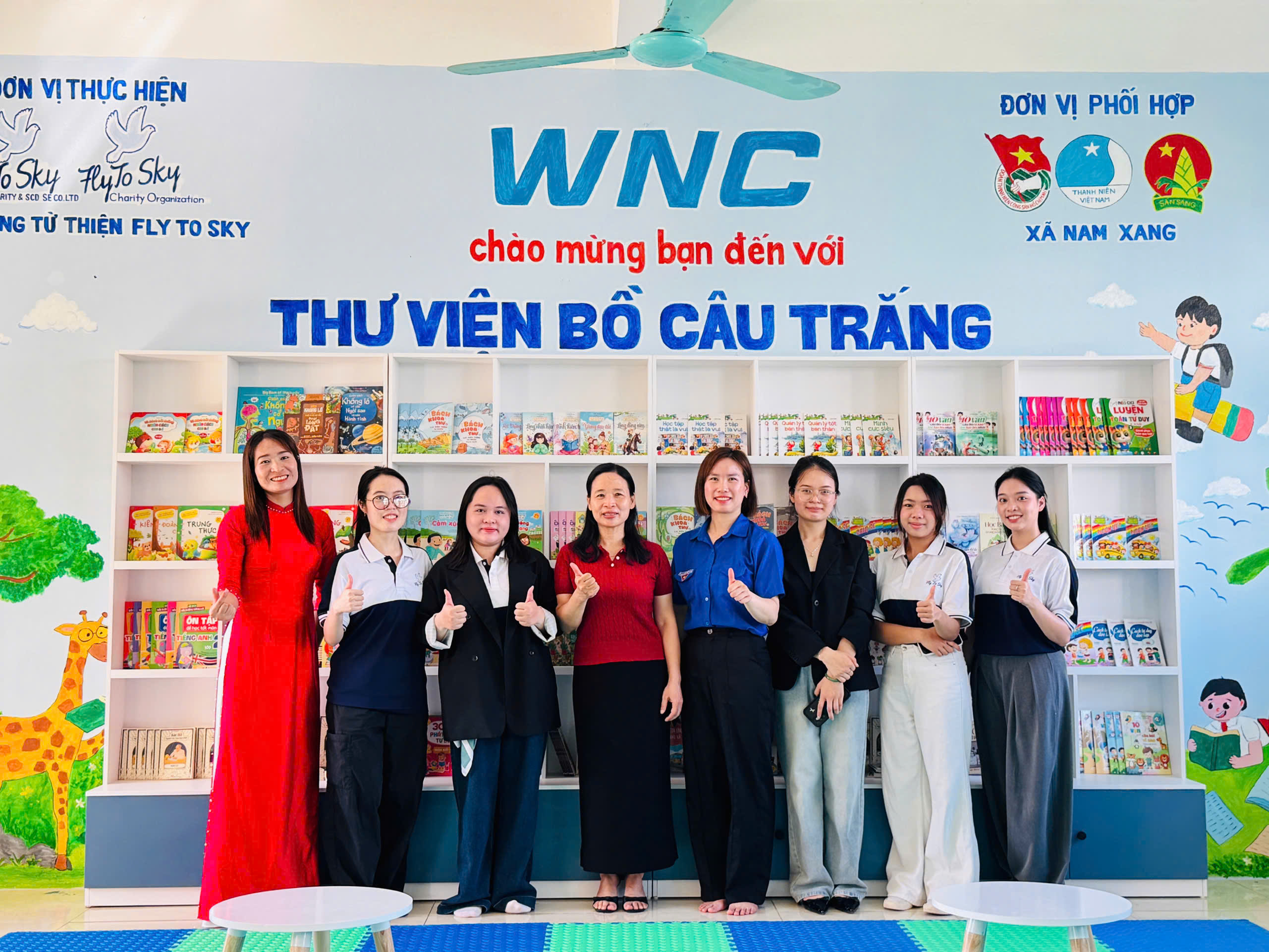
- One- to two-day programs: repainting and renovating classrooms or community spaces; organizing short-term skills classes; supporting homestays and community-based tourism models.
- Two- to three-day programs: combining tourism and cultural experiences with a specific charitable activity, with clear handover and completion records.
These small-scale projects offer several advantages:
- Easy to replicate and flexible in terms of timing.
- Suitable for small groups.
- Low cost, with relatively low legal and technical risks.
- Easy to measure results and provide transparent reports.
IV. WHY CHOOSE FLY TO SKY INSTEAD OF TRADITIONAL TRAVEL AGENCIES?
In a context where many travel agencies are beginning to offer tours incorporating “charitable” elements as an extended product, choosing an organization with an actual foundation in charitable and community work is a decisive factor in determining the effectiveness and long-term value of a program. Fly To Sky has several core differences compared with traditional tourism businesses.
1. Charity is at the core, not an additional product
Fly To Sky was established and developed from practical charitable activities, with years of direct engagement with vulnerable communities. Therefore, the voluntourism programs organized by Fly To Sky are not designed from a “tour-selling” perspective, but rather from the perspective of addressing the actual needs of local communities.
In contrast, many travel agencies simply integrate a short charitable activity into an existing travel itinerary, making the community component more symbolic, lacking in depth, and less likely to generate sustainable impact.
2. Understanding local communities and actual needs
Fly To Sky has an extensive network of partnerships with local authorities, schools, social welfare facilities, and community groups across numerous provinces and cities. Each program is preceded by a needs assessment, with requirements agreed upon in advance and the consent of the receiving local community secured.
Meanwhile, travel agencies often lack the time and resources to work extensively with local communities, which may result in activities being selected that are not truly appropriate, duplicated, or less effective.
3. Suitable for small, short-term but effective projects
Fly To Sky does not pursue “grand” projects simply for visibility, but focuses on small, practical projects that can be implemented within half a day to two or three days, such as repainting and renovating classrooms, donating school supplies, upgrading community spaces, organizing short-term skills classes, and supporting community-based tourism models.
This represents a significant advantage over traditional travel agencies, which are generally accustomed to fixed travel itineraries, have less flexibility, and lack specialized expertise in managing community activities.
4. Financial transparency and clear impact reporting
Each program organized by Fly To Sky is followed by a post-activity report, including a summary of expenses, before-and-after images, handover records, and a description of social impact. This is particularly important for businesses that require supporting documentation for CSR/ESG activities.
Many voluntourism tours offered by travel agencies stop at the experience itself, without detailed impact reports or specific handover documentation.
5. Full legal status – VAT invoice issuance
With a social enterprise model and full legal status, Fly To Sky is able to issue VAT invoices for organizational services in accordance with applicable regulations. Service fees are clearly separated from contributions/donations intended for the community, with separate receipts provided.
This is a key distinction that makes Fly To Sky a suitable partner for businesses, schools, and organizations that require legally compliant documentation for expense settlement – something that many informal volunteer groups or non-specialized travel agencies may not be able to provide.
6. Risk management and participant safety procedures
Fly To Sky has established clear procedures for each program, including assigning responsible leaders, conducting safety briefings, limiting tasks according to volunteers’ capabilities, providing basic protective equipment, and managing legal risks.
Meanwhile, travel agencies are generally strong in tourism logistics but may not have standardized procedures for charitable activities, particularly when working with children or vulnerable groups.
7. Flexible customization according to CSR and team-building objectives
Fly To Sky can flexibly design programs according to the specific objectives of each business, combining charitable activities with team-building, skills training, internal communications, or ESG reporting.
Instead of a “pre-packaged” itinerary, each program can be tailored in terms of content, duration, and impact measurement indicators, enabling businesses to achieve both social value and internal organizational value.
8. Sustainable value instead of short-term experiences
The greatest distinction of Fly To Sky lies in its implementation philosophy: charitable activities are not carried out for image-building purposes, nor are community hardships used as a marketing tool. Each program aims to leave behind long-term practical value or build local capacity, even through small changes.
This is precisely what gives Fly To Sky's voluntourism programs greater depth, sustainability, and the ability to build long-term trust with partners.
V. FLY TO SKY – PRACTICAL EXPERIENCE IN ORGANIZING VOLUNTOURISM
Fly To Sky is a nationwide charity network and social enterprise with many years of experience implementing community projects of various scales. Throughout its development, Fly To Sky has gradually standardized its voluntourism model toward a practical, transparent, and sustainable approach.
Some core experiences include:
- Prioritizing small projects with clearly defined tasks and handover outcomes.
- Working closely with local authorities to ensure suitability and consensus.
- Standardizing service contracts, quotations, and VAT invoices for organizational services.
- Providing post-program reports covering expenses, images, handover records, and social impact.
As a social enterprise with full legal status, Fly To Sky can provide comprehensive voluntourism services for individuals, schools, and businesses, while issuing VAT invoices in accordance with regulations – something that not every informal volunteer group can provide.
VI. TOWARD A SUSTAINABLE VOLUNTOURISM MODEL
For voluntourism in Vietnam to develop in the right direction, it is necessary to:
- Put community needs at the center and avoid activities carried out merely for image-building purposes.
- Prioritize small, practical, and replicable projects.
- Ensure financial transparency and clear supporting documentation.
- Ensure safety, ethical standards, and respect for local culture.
- Connect charitable activities with learning experiences and awareness-building for participants.
VIII. CONCLUSION
Voluntourism in Vietnam does not need to begin with grand initiatives. Small projects that are professionally and transparently organized can serve as the foundation for creating sustainable social impact. When implemented by organizations with practical experience and full legal status, such as Fly To Sky, voluntourism not only creates value for communities but can also become a legitimate, transparent, and scalable service model for the long term.
—
For further information, please contact:
FLY TO SKY CHARITY NETWORK
Including FLY TO SKY CHARITY AND COMMUNITY DEVELOPMENT SUPPORT SOCIAL ENTERPRISE COMPANY LIMITED & Fly To Sky Charity Organization
- Organizations and individuals wishing to accompany, cooperate with, sponsor, or seek consultation on the implementation of customized CSR and ESG projects are welcome to contact 0935.939.446 or email [email protected] – [email protected]
- Website: flytoskycharity.vn
- Zalo OA: Fly To Sky Charity Network
- Main Fanpage: https://www.facebook.com/flytoskycharity
- Volunteer Community with Fly To Sky: https://www.facebook.com/groups/392919558235980
#FlyToSky #FlyToSkyCharity #NhomtuthienFlyToSky #DNXHFlyToSky #Tinhnguyen #CSR #ESG #Vicongdong #Trachnhiemxahoi #Tuthien #Thiennguyen