
1. The History and Development of ESG
1. Origins in the Early 2000s
- In 2004, the United Nations published the report Who Cares Wins, initiated by then-Secretary-General Kofi Annan, calling for environmental, social, and governance factors to be integrated into investment analysis in order to minimize risks and optimize long-term value.
- This was followed by the establishment of the Principles for Responsible Investment (PRI) in 2006, encouraging more than 4,000 investors worldwide to commit to six principles for responsible investment, gradually establishing ESG as an international standard.
2. Acceleration in the Late 2010s
- CSR (Corporate Social Responsibility) and EHS (Environmental, Health, and Safety) initiatives that emerged during the 1980s–1990s gradually evolved into ESG, emphasizing not only the reduction of environmental impacts but also the management of social risks and the strengthening of transparent governance mechanisms.
- The establishment of the TCFD (Task Force on Climate-related Financial Disclosures) in 2017 further encouraged companies to disclose climate-related risks and opportunities, with the proportion of companies complying with at least one of its 11 recommendations increasing from 73% in 2022 to 82% in 2023.
2. ESG Reporting Frameworks and Standards
2.1 GRI, SASB and TCFD
- GRI (Global Reporting Initiative): A comprehensive, principle-based standard covering most environmental, social, and governance aspects, suitable for companies across different industries and of varying sizes.
- SASB (Sustainability Accounting Standards Board): Focuses on industry-specific material issues, covering sectors such as energy, finance, and consumer goods, helping investors compare companies within the same industry.
- TCFD: Focuses specifically on climate-related risks and opportunities, recommending four key areas: governance, strategy, risk management, and metrics and targets.
2.2 New and Emerging Standards
- IFRS S1/S2 (replacing SASB from 2024): Global sustainability reporting standards designed to standardize ESG data (S1) and climate-related information (S2), creating a more robust reporting framework for listed companies.
- EU CSRD (mandatory from 2025): Requires large companies, including those with more than 250 employees or revenue exceeding EUR 40 million, to disclose sustainability information in accordance with European standards.
3. ESG Metrics and Measurement Methods
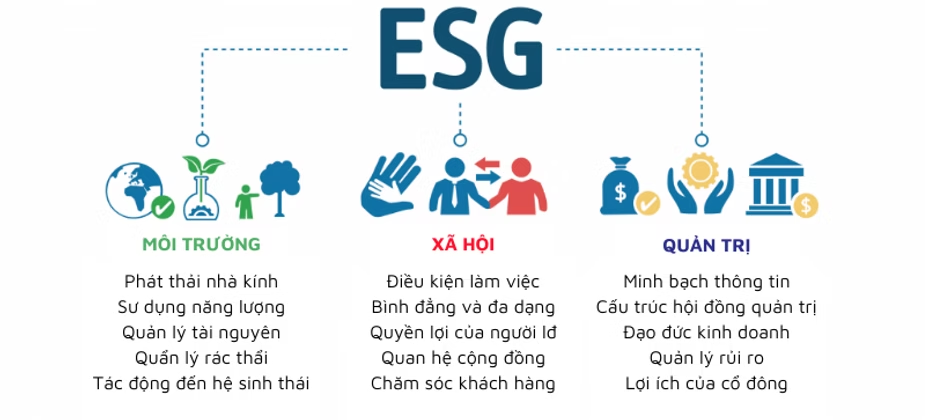
- Greenhouse Gas Emissions (GHG Emissions)
- Classify emissions into Scope 1, 2, and 3 in accordance with the GHG Protocol.
- Resource Consumption and Recycling
- Renewable energy use, waste recycling rates, and the volume of water reused.
- Social Indicators
- Diversity and inclusion (DE&I) rates, workplace accident rates, and employee training and development.
- Governance Indicators
- Percentage of independent board members, executive compensation structures, financial reporting transparency, and the rate of legal disputes.
Note: The lack of standardized data and collection methods makes comparisons difficult and increases the risk of greenwashing.
4. Benefits of Implementing ESG
4.1 Financial Performance and Shareholder Value
- McKinsey's “ESG Premium”: 83% of C-suite executives and investment professionals believe that ESG programs contribute positively to corporate value.
- McKinsey research indicates that companies that consistently pursue both profit growth and ESG improvements tend to achieve higher total shareholder returns (TSR) than the industry average.
4.2 Attracting Sustainable Investment
- According to PwC, ESG-related assets under management are expected to reach USD 33.9 trillion by 2026, an 84% increase from 2021 and accounting for 21.5% of total global AUM.
- In the United States, ESG AUM is projected to reach USD 10.5 trillion by 2026, up from USD 4.5 trillion in 2021.
4.3 Reducing Risks and Operating Costs
- Companies with stronger ESG performance are less vulnerable to market shocks during economic volatility, with stock price declines more than 30% lower than those of low-ESG companies during crises.
- Long-term cost savings can also be achieved through more efficient use of energy and raw materials.
4.4 Brand Reputation and Market Share
- 81% of consumers globally are willing to pay more for sustainable products, while 83% have a more positive view of companies that demonstrate environmental responsibility.
5. Challenges and Risks
- Greenwashing
- DWS (Deutsche Asset Management) was fined EUR 25 million in Germany and paid USD 19 million to the U.S. SEC for overstating its ESG claims.
- Brands such as Volkswagen (Dieselgate), Shell, H&M, and Ryanair have faced criticism over misleading environmental claims.
- Lack of Reliable Data
- Only around 2–4% of companies worldwide fully report against all 11 TCFD recommendations.
- High Compliance Costs
- Preparing CSRD and IFRS S1/S2 reports and conducting ESG audits can cost large companies hundreds of thousands to millions of U.S. dollars each year.
- Balancing Short-Term Profit and Sustainable Investment
- Companies may be concerned that ESG investments could reduce short-term profitability, particularly when shareholders prioritize immediate financial returns.
6. Guidelines for Implementing an ESG Strategy
- Leadership Commitment and Corporate Culture
- Boards of Directors and executive management should integrate ESG into strategic objectives and establish ESG KPIs linked to performance evaluation and incentives.2. Integrated Risk Management Framework
- Incorporate ESG risk analysis into the organization's overall risk assessment and management processes.
- Data Collection – Calculation – Reporting
- Develop ERP/BI systems to automate the collection of environmental and social data; apply GRI/SASB/TCFD standards and conduct external audits.
- Transparent Communication
- Publish sustainability reports regularly and engage with investors, customers, and communities through dedicated channels such as websites, integrated reports, and webinars.
- Product and Service Innovation
- Develop green products, sustainable supply chains, and cradle-to-cradle product life-cycle models.
7. Future Trends
- Growing influence of institutional investors: Pension funds and sovereign wealth funds are demanding more accurate and transparent ESG data.
- Global reporting standards: IFRS S1/S2 and EFRAG ESRS (EU) are expected to consolidate multiple existing standards, reducing complexity for multinational companies.
- Technology-enabled ESG: Blockchain and AI can support the collection and verification of ESG data in real time.
- Expanding ESG scope: Greater attention is being paid to ecological impacts such as biodiversity, human rights in supply chains, and cybersecurity.
Conclusion
ESG is not merely a “magic wand” for creating sustainable corporate value; it is also a shield against market volatility, regulatory risks, and changing social expectations. Investing in ESG means investing in the future, where economic interests, social responsibility, and environmental protection go hand in hand. Companies that identify opportunities accurately, take a proactive approach to governance, and maintain transparency will be better positioned to achieve sustainable competitive advantages.
References
- ESG Là Gì & Làm Thế Nào Để Doanh Nghiệp Của Bạn Dẫn Đầu? ↗ (accessed 2025-06-22)